Top 15+ Brainstorming Activities for Students to Boost Creativity
Brainstorming activities for students are essential tools that empower learners to unlock their creative potential and solve complex problems. In the modern educational landscape, creativity acts as a critical thinking skill that fosters collaboration and innovation.
This article outlines engaging activities for different age groups and illustrates how ISHCMC cultivates these vital skills.
3 Engaging Brainstorming Activities for Primary Years
Primary students thrive when brainstorming is structured, visual, and collaborative. These brainstorming activities for students in primary levels scaffold inquiry, helping young learners organize their thoughts without feeling overwhelmed by open-ended tasks.
Activity: Mind Mapping
Mind mapping is a visual tool where students use colors and images to branch out ideas from a central topic. This technique moves beyond linear note-taking, allowing children to create a visual diagram of connections. By associating images with keywords, students see the “big picture” of a subject.
Why it works: It visualizes connections between concepts, making it easier for young learners to structure their thoughts non-linearly. This method supports the inquiry-based approach of the Primary Years Programme (PYP).
Activity: The "W" Questions
The “W” questions method uses Who, What, Where, When, and Why to guide inquiry, providing a concrete framework for investigation. This structured approach mirrors the inquiry cycle found in high-quality primary education, ensuring no aspect of a topic is overlooked.
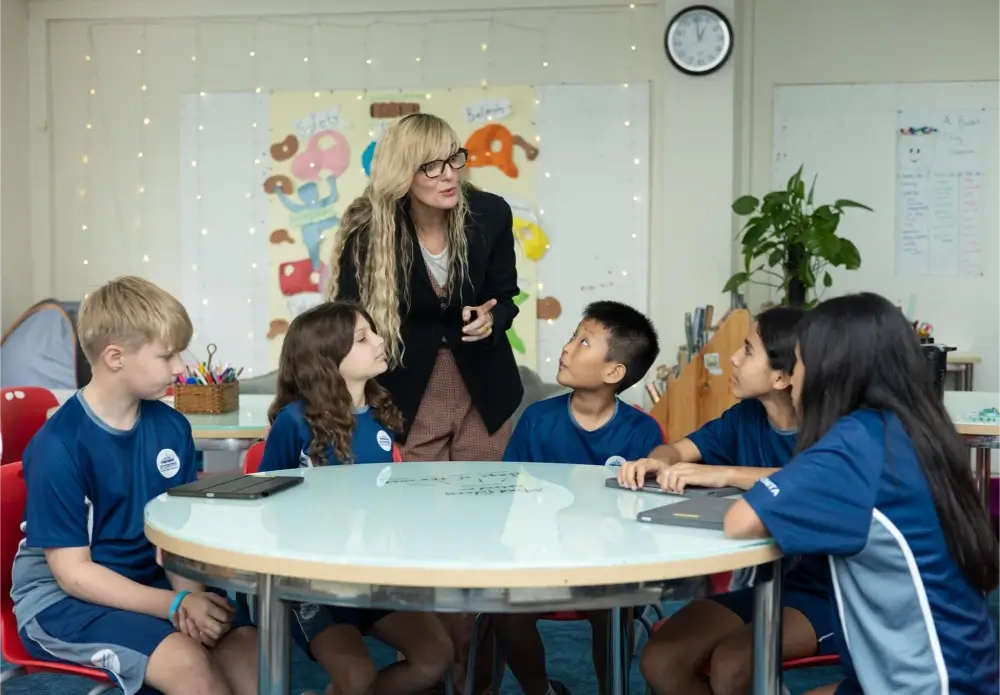
Why it works: It provides a concrete scaffold for inquiry, preventing students from feeling overwhelmed by open-ended questions. By breaking down complex topics into manageable parts, students ensure comprehensive exploration.
Activity: "Idea Pass"
In the “Idea Pass” activity, students pass a paper around a group, with each member adding one idea or drawing to the collective list. This generates a volume of ideas quickly and democratizes the creative process, ensuring equal participation.
Why it works: It reduces the pressure to be “original” by building on peers’ ideas, fostering a safe environment for risk-taking. This technique builds collective creativity and helps students understand the value of collaboration.
3 Advanced Brainstorming Strategies for Secondary Students
Secondary students require advanced strategies that challenge analytical capabilities and encourage strategic foresight. These brainstorming activities for students align with the rigorous demands of the IB Diploma Programme (DP).
Activity: S.W.O.T. Analysis
S.W.O.T. Analysis encourages students to analyze ideas by looking at Strengths, Weaknesses, Opportunities, and Threats. This framework is particularly effective for IB Business Management or Creativity, Activity, Service (CAS) projects, providing a structured method for evaluation.
Why it works: It encourages objective self-assessment and strategic thinking, moving students beyond emotional reactions to logical planning. This methodical approach ensures students evaluate the viability of their ideas before implementation.
Activity: The Six Thinking Hats
The Six Thinking Hats method uses different colored “hats” to help students view problems from multiple perspectives: White (Facts), Red (Feelings), Black (Caution), Yellow (Optimism), Green (Creativity), and Blue (Process).
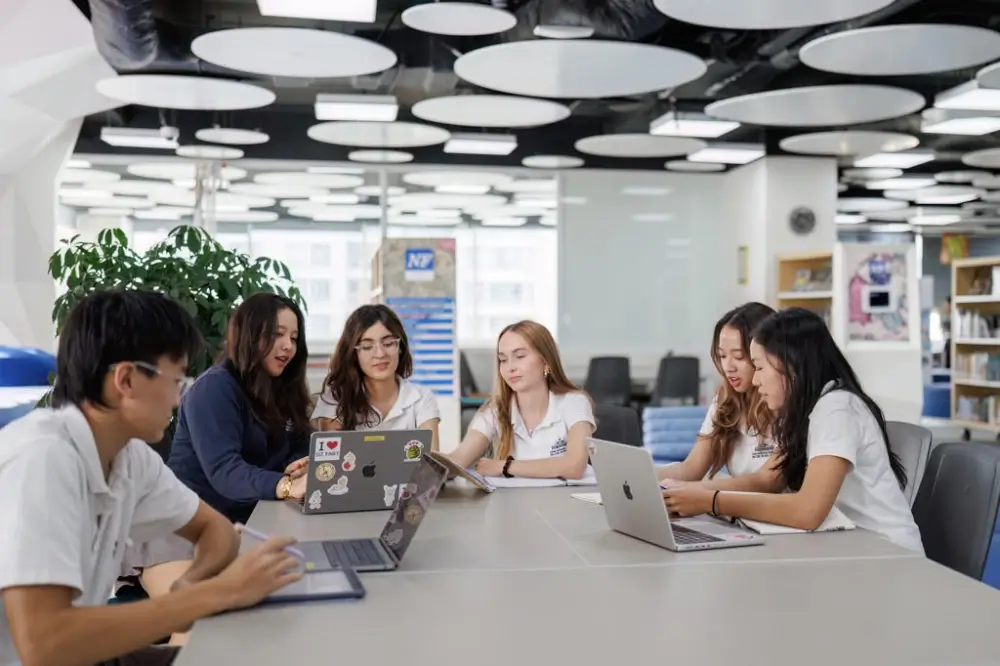
This parallel thinking process forces the brain to separate distinct modes of thinking, ensuring a balanced analysis.
Why it works: It forces students to adopt different perspectives, ensuring that a single idea is examined from emotional, factual, and creative angles. This reduces bias and is a vital skill for Theory of Knowledge (TOK).
Activity: Socratic Seminars
Socratic Seminars use open-ended questions to stimulate deep thinking and refine ideas through dialogue. Students engage in a collective investigation of a text or idea, with the teacher acting as a facilitator rather than a lecturer.
Why it works: It shifts the focus from the teacher to the students, empowering them to find answers through critical listening and collaborative reasoning. This develops the articulation and argumentation skills necessary for the Middle Years Programme (MYP) and DP.
3 Collaborative Brainstorming Techniques for Group Work
Effective group brainstorming requires techniques that ensure equitable participation. These brainstorming activities for students are designed to include all voices, regardless of personality type.
Activity: Brainwriting
Brainwriting is a technique where individuals write ideas silently on cards before sharing them with the group. This ensures that the initial ideation phase is free from the influence of dominant personalities, allowing for a pure exchange of concepts.
Why it works: It eliminates the “loudest voice wins” dynamic, ensuring that introverted students and English language learners have equal space to contribute. In diverse international school environments, this inclusivity is crucial.
Activity: Role-Storming
Role-storming involves students acting out specific personas, such as a customer or historical figure, to solve a problem from a different viewpoint. By adopting a “mask,” students can explore solutions they might otherwise feel too inhibited to suggest.

Why it works: It lowers social inhibitors by adopting a persona, allowing students to suggest bold ideas they might not voice as themselves. This fosters empathy and encourages students to think beyond their personal biases.
Activity: Reverse Brainstorming
Reverse brainstorming challenges conventional thinking patterns by asking students to identify ways to cause a problem rather than solve it. For example, asking “How can we make students dislike reading?” to find ways to encourage reading.
Why it works: It challenges conventional thinking patterns; often it is easier to identify causes of failure than paths to success. This technique reveals hidden obstacles and provides a fresh perspective on stubborn problems.
How ISHCMC Nurtures Creative Problem Solvers
At ISHCMC, we integrate brainstorming activities for students into a holistic environment where creativity meets academic rigor. Our approach goes beyond generating ideas; we equip students with the skills to bring those ideas to fruition:
- Holistic Environment: Brainstorming is woven into daily learning, supported by facilities that allow students to prototype ideas immediately, bridging conceptual thought and practical application.
- Academic Excellence: Our approach yields measurable results. In 2025, ISHCMC students surpassed US national norms by 7–20 points in Math, Reading, and Language Usage. Grade 10 students exceeded Reading norms by 12 points (Top 10% nationally), reflecting the strong analytical skills fostered by our curriculum.
- The IB Continuum Advantage: We offer the complete IB Continuum (PYP, MYP, DP), building inquiry skills sequentially. With three graduation pathways, we respect individual interests while maintaining high standards.
Support Systems: With 65% of our educators holding Master’s degrees, our experienced faculty expertly guide students through complex brainstorming sessions.

We invite parents to visit our purpose-built campuses to see how our community empowers students to become the problem solvers of tomorrow.
FAQs
Addressing common inquiries helps parents and educators better understand how to implement brainstorming activities for students effectively.
1. Can brainstorming be done individually?
Yes, techniques like mind mapping and free writing are highly effective for individual brainstorming sessions. However, group brainstorming adds the benefit of diverse perspectives and collaborative synergy which enhances the final output.
2. How does reverse brainstorming differ from traditional brainstorming?
Reverse brainstorming flips the problem by asking how to cause an issue rather than solve it, often revealing hidden obstacles. Parents and students can read more about this technique in our dedicated article on reverse brainstorming.
3. How can parents encourage brainstorming at home?
Parents can encourage brainstorming by asking open-ended questions during family discussions or planning activities. Modeling a curious mindset and valuing creativity over “correct” answers reinforces these skills learned at school.
4. What is the difference between brainstorming and problem-solving?
Brainstorming is the divergent phase of generating a wide volume of ideas without immediate judgment. Problem-solving is the convergent process that follows, involving the analysis and selection of those ideas to find a solution.
5. How do brainstorming skills help in university admissions?
Universities value students who can think critically, solve problems creatively, and collaborate effectively. Strong brainstorming skills help students write compelling personal essays and succeed in rigorous academic environments.