May 24, 2026
Reverse Brainstorming: An Innovative Tool for Student
Reverse Brainstorming: An Innovative Tool for Student
Parents often witness their children struggling with traditional problem-solving methods, hitting creative blocks, or feeling overwhelmed by the pressure to find the “correct” answer immediately. Reverse brainstorming is an innovative method that stimulates creativity, identifies hidden obstacles, and builds resilience.
This article will explore the mechanics of reverse brainstorming, its psychological benefits for students, and how we apply this transformative approach at ISHCMC.
What Is Reverse Brainstorming?
Reverse brainstorming is a creative technique where participants brainstorm ways to cause or worsen a problem rather than solving it, providing a fresh perspective on challenges.
Unlike traditional brainstorming, which asks for direct solutions and can often create immediate pressure to be “right,” this method encourages participants to explore the negative space.
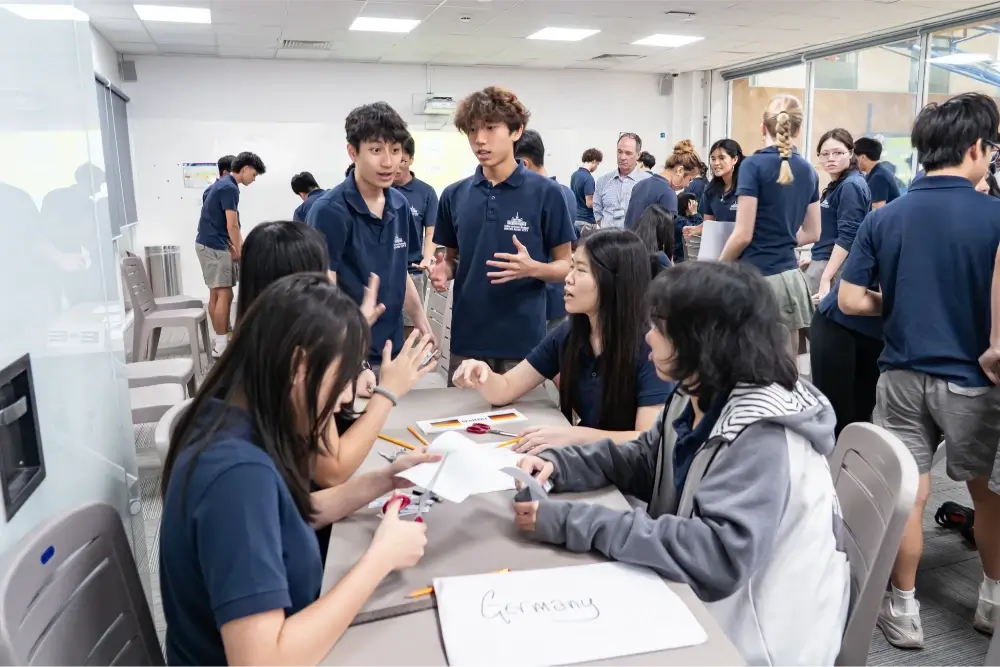
By focusing on how to cause failure, we expose variables and root causes that we might otherwise ignore due to cognitive bias or conventional thinking. This “inversion” principle is particularly effective in educational settings where inquiry and critical analysis are paramount.
To clearly illustrate the differences, consider the following comparison between the two methodologies:
| Feature | Normal Brainstorming | Reverse Brainstorming |
| Primary Focus | Generating direct solutions. | Generating causes of the problem. |
| Initial Question | “How do we solve this?” | “How do we cause or worsen this?” |
| Psychological Effect | Can induce performance pressure. | Reduces pressure; encourages critique. |
| Outcome | List of potential solutions. | List of obstacles to avoid/convert. |
| Best Use Case | Linear problems or straightforward ideation. | Complex, stubborn, or vague issues. |
The Psychology Behind Reverse Brainstorming
The psychology behind this method relies on creating psychological safety and harnessing the brain’s natural negativity bias to break cognitive fixedness and encourage inquiry.
- Psychological Safety: It is often easier and more engaging to critique or list failures than to propose perfect solutions. This lowers the barrier to participation for students who may fear giving the “wrong” answer.
- Negativity Bias: Humans are naturally better at identifying threats or faults. This technique harnesses that innate ability for constructive purposes, allowing students to channel their critical instincts productively.
- Breaking Functional Fixedness: Looking at the problem backwards forces the brain out of standard patterns of thinking. It disrupts the usual neural pathways, encouraging novel connections and innovative ideas.
This approach shifts the educational focus from rote memorization to genuine inquiry. In rigorous academic environments, identifying why a hypothesis might fail is just as important as proving it right.
How to Conduct a Reverse Brainstorming Session
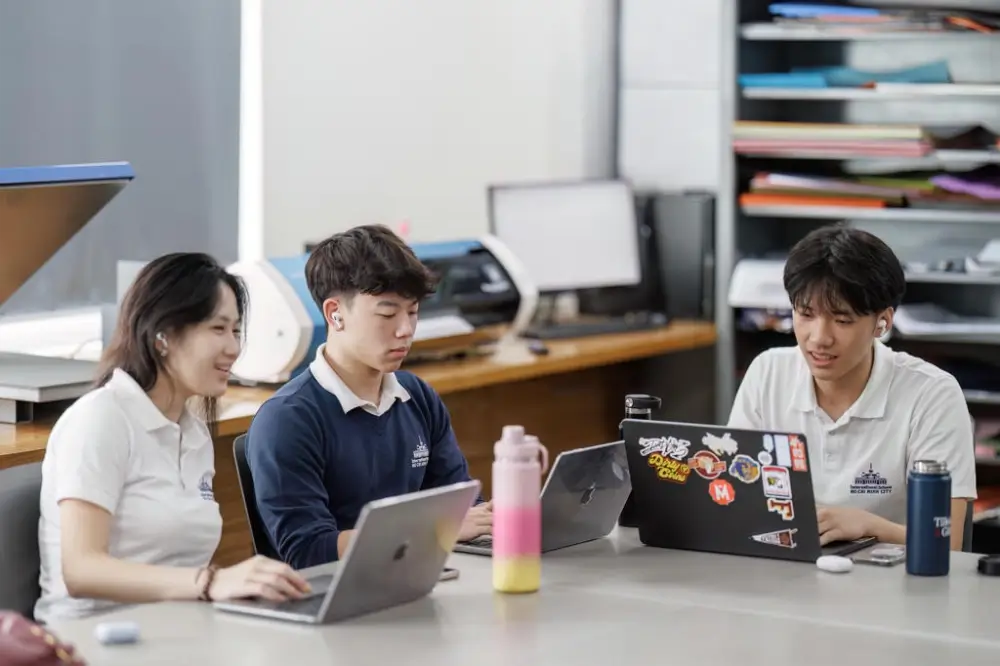
To conduct a reverse brainstorming session, one must follow a clear four-step process that inverts the problem statement to uncover hidden obstacles and actionable solutions.
- Step 1 – Identify the Problem: Write down the specific problem clearly. For example, “Students are not engaging in class discussions.”
- Step 2 – Invert the Problem: Reverse the goal to create a negative problem statement. For instance, “How can we ensure students never speak in class?”
- Step 3 – Brainstorm Reverse Solutions: List all possible ways to achieve the negative outcome. Ideas might include “Make the questions impossible to answer,” “Ignore raised hands,” “Criticize every answer immediately,” or “Make the environment intimidating.”
- Step 4 – Reverse the Solutions: Take the generated “reverse solutions” and flip them back to find actionable positive strategies. If “Criticize every answer” was a way to silence students, the solution is “Create a supportive environment where all contributions are valued.”
Applying Reverse Brainstorming at Home and School
Parents and educators can apply reverse brainstorming to resolve conflicts and enhance project planning, teaching students resilience by anticipating failure points before they occur.
For parents, this tool can address household friction effectively.
If the issue is a messy bedroom, ask the child, “How can we make sure this room is a total disaster zone?” The child might suggest leaving clothes on the floor, throwing books on the bed, and never using the laundry bin.
Reversing these actions provides a clear checklist for organization: place clothes in the hamper, stack books on the shelf, and utilize storage bins. This turns a nagging session into a collaborative game.
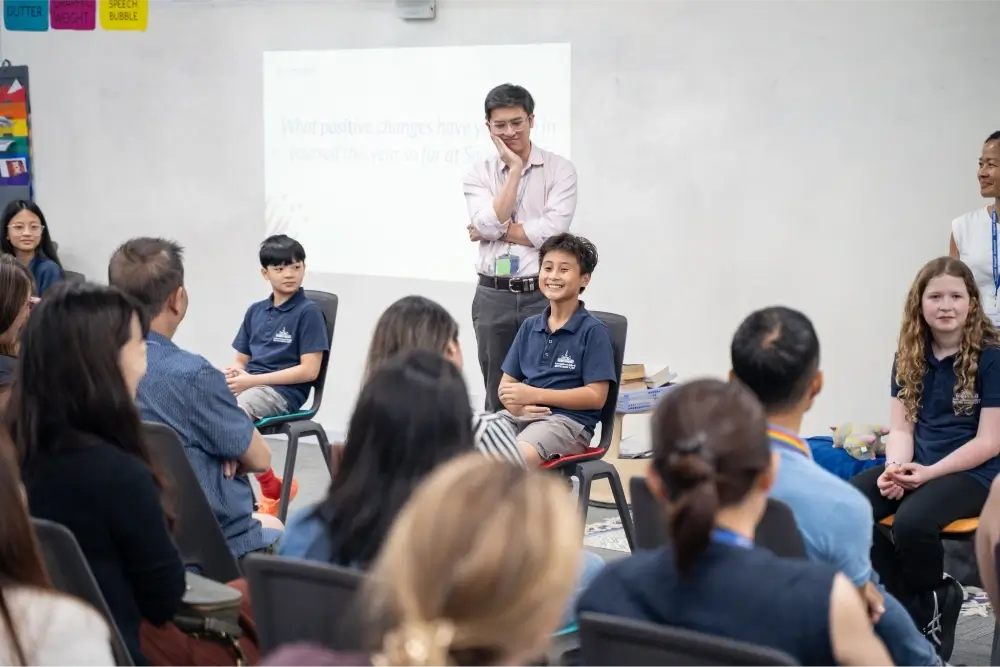
For students, the technique is invaluable for project planning and conflict resolution. It teaches resilience by preparing them for potential pitfalls before they happen. In an academic context, this connects deeply to critical thinking.
For instance, when designing a science experiment, asking “How could I ruin this experiment?” helps identify variables that need controlling. This mirrors the high-level inquiry-based learning encouraged at ISHCMC, where students are taught to view problems from multiple angles to achieve deeper understanding.
Empower Your Child’s Future with ISHCMC
Traditional problem-solving can stifle creativity and increase stress for students. Reverse brainstorming offers a robust alternative, unlocking innovation by identifying the causes of failure.
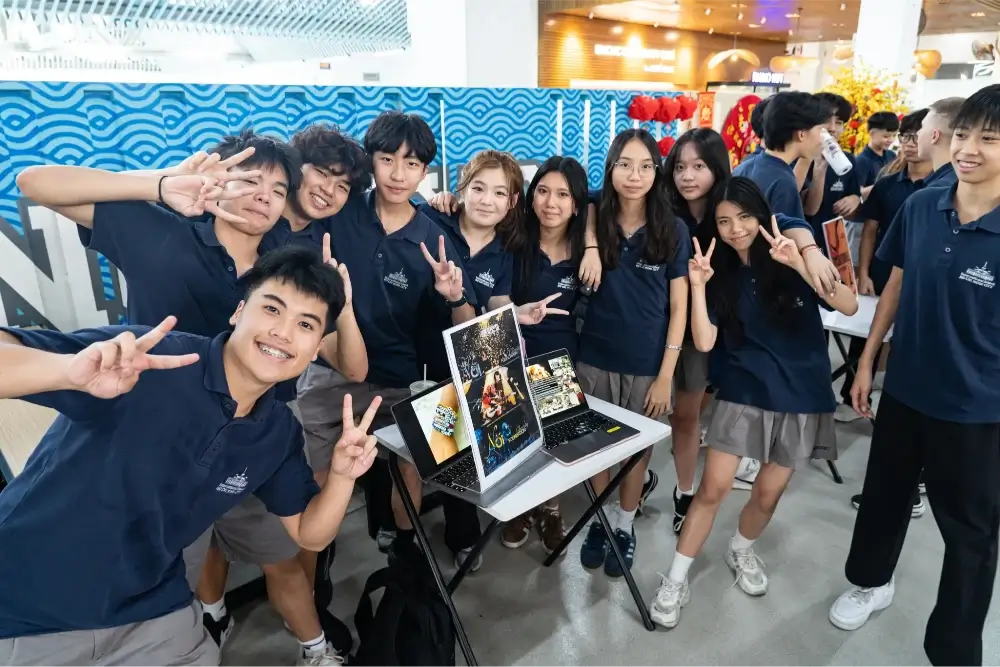
By integrating reverse brainstorming into your child’s learning toolkit, we equip them with the resilience and critical thinking skills necessary for academic and personal success.
We invite parents to explore how ISHCMC fosters these essential skills through our innovative, inquiry-driven curriculum.
FAQs
Here are some frequently asked questions regarding reverse brainstorming to help clarify its application and benefits.
1. Can reverse brainstorming be used for personal goals?
Yes, individuals can use it to identify obstacles to their goals. By listing ways to sabotage their own success, they can uncover hidden fears or bad habits to address.
2. Is this method suitable for young children?
Absolutely, young children often find it funny and engaging to think of “bad” ideas. It simplifies problem-solving by removing the pressure to be perfect immediately.
3. How does this differ from risk management?
Risk management focuses on identifying potential future failures in a system. Reverse brainstorming is a creative ideation technique used to generate those risks or problems actively and collaboratively.
4. Can this technique help with writer's block?
Yes, writers can ask, “How can I make this story terrible?” By identifying plot holes or boring dialogue, they naturally discover what elements to include to make the story compelling.
5. How long should a reverse brainstorming session last?
Typically, the brainstorming phase itself is short, around 10 to 15 minutes. The value comes quickly because negative ideas are often easier to generate than positive ones.
6. What if the team gets stuck on negative ideas?
If a team gets stuck, the facilitator can encourage wilder or more absurd negative ideas. The goal is quantity over quality in the initial phase, which often sparks unexpected insights.