IB PYP (International Baccalaureate) vs Reggio Emilia: The similarity & the difference
Choosing an educational approach for your young child is one of the most meaningful decisions you will make as a parent.
Two names come up often in international school conversations: the IB Primary Years Programme (PYP) and the Reggio Emilia approach. Reggio Emilia is primarily used in early years settings, while IB PYP extends through to age 12. Both are child-centred and value curiosity, but they work in very different ways.
This article breaks down what each approach really means, where they overlap, and how to decide which one fits your child.
What IB and Reggio Emilia Actually Mean in Practice?
Before comparing the two, it helps to understand what each one actually is.
The Origins and Core Philosophy of the IB PYP
The International Baccalaureate Primary Years Programme (IB PYP) is a globally recognised educational framework for children aged 3 to 12. It is offered in schools across more than 150 countries.
The IB PYP focuses on:
- Inquiry-based learning
- Developing critical and creative thinking
- Building international-mindedness
- A structured set of Units of Inquiry across six transdisciplinary themes
Because it is an accredited, standardised programme, families who move between countries can expect a consistent educational experience at any authorised IB World School.
What the Reggio Emilia Approach Is Built On
The Reggio Emilia approach was developed in northern Italy after World War II by educator Loris Malaguzzi, together with local families. At its heart is a belief that children are capable, curious, and full of potential from birth.
Key principles include:
- The child leads the direction of learning
- The environment acts as the “third teacher”
- Learning happens through projects that follow children’s natural interests
- Documentation (photos, journals, observations) replaces formal testing
Unlike IB, Reggio Emilia is a philosophy rather than a formal curriculum. There is no official accreditation body, so how it is applied varies from school to school. It is most commonly used in early childhood settings.
Similarities & Key Differences Between IB and Reggio Emilia Side by Side
Despite their differences, IB PYP and Reggio Emilia share more common ground than many parents expect.
Both approaches:
- See children as active participants in their own learning
- Encourage inquiry, exploration, and questions
- Value collaboration between teachers, children, and families
- Move away from rote memorisation and passive instruction
Where they differ is in structure, assessment, and long-term application.
| Feature | IB PYP | Reggio Emilia |
| Type | Accredited programme | Educational philosophy |
| Age range | 3 to 12 years | 0 to 6 years |
| Curriculum structure | Defined Units of Inquiry | Emergent, child-led projects |
| Teacher role | Structured guide and facilitator | Co-investigator alongside children |
| Assessment | Portfolios, reflections, standardised tools | Documentation and observation |
| Global recognition | Yes, 150+ countries | Widely respected, not standardised |
| School transferability | High | Varies by school interpretation |
The good news is that families do not have to choose between structure and creativity. The IB PYP provides a globally recognised framework that travels with your child across countries and school systems. When enriched by Reggio Emilia principles, such as child-led inquiry, creative exploration, and a deep respect for each learner’s voice, it becomes an even more powerful foundation for early childhood education.
How ISHCMC Brings the Best of Both Worlds to Students
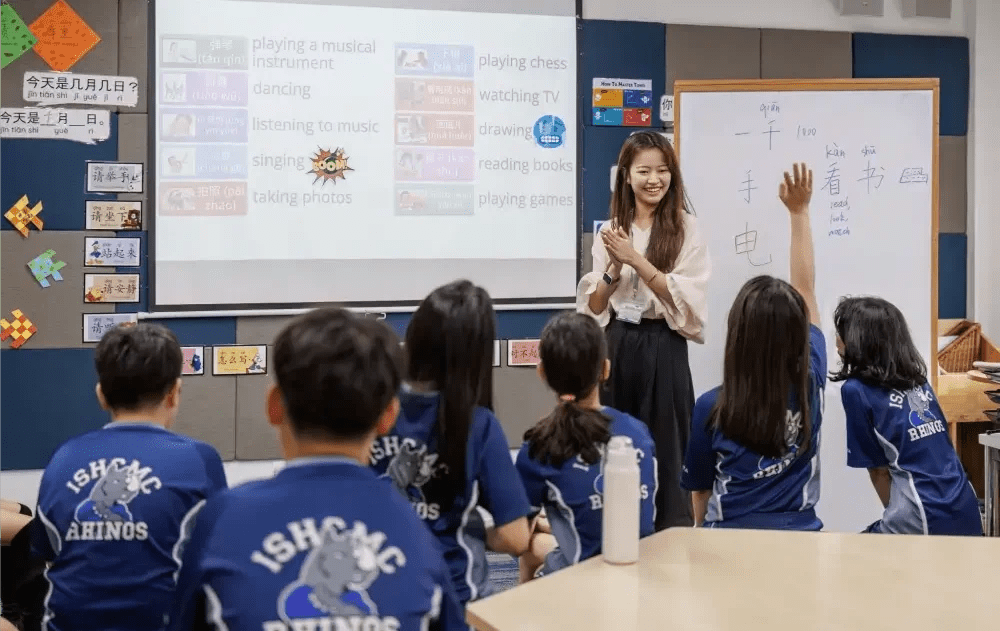
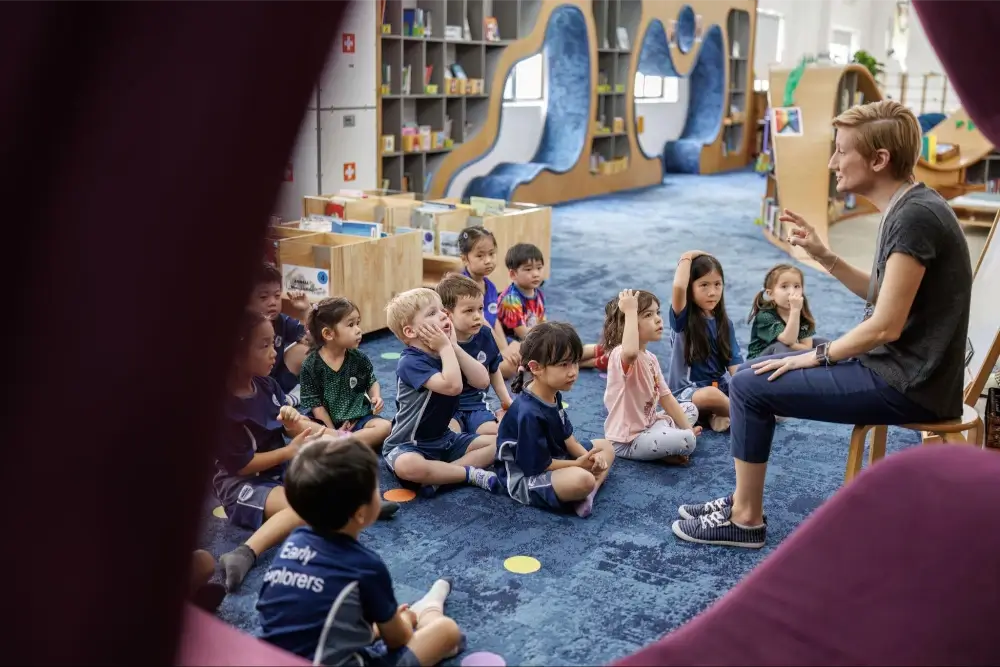
ISHCMC offers a full academic journey from age 2 all the way through to secondary school, following the complete IB continuum from PYP to the Diploma Programme. From the very beginning, the Early Years programme is inspired by the Reggio Emilia approach, nurturing each child as a unique individual with their own voice, curiosity, and potential. Students learn through play, hands-on exploration, and inquiry, building strong foundations that carry them confidently into primary school and beyond.
At the same time, ISHCMC integrates a holistic, child-centred philosophy into daily learning. Early Years students learn through play, exploration, and real-world inquiry. Social and emotional development is woven into everyday school life, helping children build self-awareness, empathy, and healthy relationships from an early age. The arts, sports, and community involvement are treated as essential parts of education, not extras.
With students from over 60 nationalities and teachers from around the world, ISHCMC creates the kind of diverse, curious learning environment that both IB and Reggio Emilia educators would recognise and value.
There is no single right answer for every child. Instead of looking for the “best” approach in general, ask what is best for your specific situation.
5 Questions to Ask Yourself Before Choosing
Before making a decision, work through these questions. They are designed to help you weigh your options and arrive at a choice that fits your child and your family.
1. Where do you plan to live long term?
If international moves are likely, an accredited IB school offers stronger continuity across countries.
2. What is your child’s learning style?
Some children thrive with structure and clear learning outcomes. Others do better with open-ended exploration and child-led projects.
3. How involved do you want to be?
Reggio Emilia schools often expect deeper, more regular parental participation in the learning process.
4. What are your goals for ages 12 and beyond?
IB provides a clear pathway through secondary school and into top universities worldwide.
5. How does the school actually deliver the approach?
A label matters less than the quality of teaching in the classroom. Ask to see how the philosophy plays out in a real lesson.
How to Make the Right Choice for Your Child
Both IB PYP and Reggio Emilia reflect a genuine commitment to putting children first. The best choice depends on your child’s needs, your family’s circumstances and the school’s ability to bring their stated approach to life.
Nothing replaces a visit to the campus. Speak with the teachers. Talk to parents whose children are already enrolled. Watch how the children interact with each other and with their learning environment. A school’s culture tells you far more than its brochure ever will.
FAQs
1. Is Reggio Emilia recognised as an official curriculum internationally?
No. Reggio Emilia is an educational philosophy, not a formally accredited curriculum. How it is applied varies from school to school, with no international standard body overseeing it.
2. At what age does the IB programme typically begin for young children?
The IB PYP begins from age 3 in the Early Years and continues through to age 12, making it one of the few international frameworks that covers the full primary school journey.
3. Do Reggio Emilia schools prepare children for structured academic programmes later on?
Many children from Reggio-inspired settings transition well into structured programmes. However, the experience varies depending on how the school has implemented the approach and what comes next in the child’s education.
4. Can IB and Reggio Emilia work together in one school?
Yes. A good example is ISHCMC, whose Early Years programme is directly inspired by the Reggio Emilia approach. Children aged 2 to 5 learn through play and hands-on exploration, with teachers observing and guiding rather than instructing. This sits naturally within the broader IB PYP framework, which adds structure, clear learning outcomes, and global accreditation. The two are philosophically compatible, and ISHCMC shows how they can work together in practice.
5. Can a child switch from a Reggio Emilia school to an IB school without difficulty?
Yes, it is absolutely possible, and in fact, it is a very common and highly successful transition for many young children. Reggio Emilia and IB share the same progressive DNA: Constructivism (the belief that children learn best by actively constructing knowledge, not by passively memorizing facts). Here are transition look like in common.
Transitioning at Ages 4 – 6 (Kindergarten / Grade 1): This is the ideal window. At this age, IB classrooms are still incredibly play-based and inquiry-focused. Your child won’t feel a massive academic shock; they will simply notice that the day has a bit more routine and that they are using more traditional tools (like computers or structured reading books) alongside open-ended materials.
Transitioning at Age 7+ (Grade 2 and up): If you keep your child in a Reggio-inspired elementary program and switch later, the gap in formal academic stamina (sitting still for longer blocks, structured writing formats, following specific math curricula) will be wider. They will catch up quickly because their critical thinking skills will be high, but they may need a few months to adjust to the boundaries of a school schedule.
6. How do international schools in Vietnam typically approach early childhood education?
Many international schools in Ho Chi Minh City blend elements of play-based and inquiry-based learning within formal frameworks like IB PYP. Schools like ISHCMC offer a full IB continuum while nurturing the social and emotional development that families value in approaches like Reggio Emilia.