
How to Study for IB: Strategies for High Results
To master how to study for IB, students must adopt a strategic approach blending time management, critical thinking, and emotional balance rather than mere memorization. While the International Baccalaureate is globally renowned for its rigor, the workload often creates anxiety for families.
This article outlines essential strategies involving curriculum understanding, effective study habits, and the supportive environment needed for top results.
The Six IB Subject Groups
The IB Diploma Programme requires students to select courses from 6 distinct IB subject groups, ensuring a broad and balanced educational experience.
- Group 1: Studies in Language and Literature (Language A): Native or near-native language studies.
- Group 2: Language Acquisition (Language B/ab initio): A second language for intermediate or beginner levels.
- Group 3: Individuals and Societies: Humanities courses like Economics, History, and Psychology.
- Group 4: Sciences: Experimental sciences such as Biology, Chemistry, and Physics.
- Group 5: Mathematics: Analysis and Approaches (AA) or Applications and Interpretation (AI).
- Group 6: The Arts (or Elective): Visual Arts, Music, or Theatre; alternatively, a second subject from Groups 1-4.
To delve deeper into the specific courses offered, parents and students can view our detailed IB Diploma subjects overview.
A Step-by-Step Guide on How to Study for IB
Mastering the IB Diploma Programme requires a methodical approach where students actively engage with the curriculum. We guide our students through a structured process to ensure they understand the demands of the programme.
Step 1: Understand the Structure of the IB Curriculum
Comprehending the program’s architecture is the first step in mastering how to study for IB, as it dictates how students distribute their time and energy.
Students must first grasp the core components: the Extended Essay (EE), Theory of Knowledge (TOK), and Creativity, Activity, Service (CAS).

Additionally, they must distinguish between Higher Level (HL) courses, which require deeper understanding, and Standard Level (SL) courses.
Understanding assessment criteria, specifically the distinction between internal assessments and final exams, is crucial early in the process.
At ISHCMC, we support this structural understanding through a 1:1 university and career counseling program starting in Grade 9. This early intervention helps students map their academic pathways effectively, ensuring they understand the weight of each assessment before the pressure mounts.
Step 2: Develop Effective Study Habits and Time Management
Building robust study habits allows students to manage the heavy workload efficiently, ensuring they retain information rather than cramming.
Students must create a realistic study schedule that accounts for the “two-year journey” of the IB. This long-term perspective prevents the common pitfall of last-minute panic.

We advise students to move beyond passive reading and adopt active study methods such as spaced repetition and past paper practice. A core element of the IB approach is “learning how to learn” (metacognition), which we foster at ISHCMC through inquiry-based learning.
As an Apple Distinguished School, ISHCMC also encourages students to use digital tools for organization. Our research with University College London (UCL) showed that multimedia reflection tools significantly enhance learning outcomes, proving that technology aids metacognition.
Step 3: Balance Academic Rigor with Wellbeing
Integrating wellbeing practices into the daily routine is crucial because academic performance declines when a student faces burnout.
There is a direct correlation between stress management and academic performance. CAS (Creativity, Activity, Service) is a necessary counterbalance to academic pressure, fostering personal growth.

We also implement our “POSISH” framework (Positive ISHCMC) to teach resilience and empathy, supporting students through high-pressure periods.
Furthermore, sleep, nutrition, and physical activity are vital. With state-of-the-art athletics facilities and over 95 After School Activities (ASA), ISHCMC provides essential mental breaks that recharge the brain for more effective study sessions.
Step 4: Leverage Teacher Expertise and Peer Collaboration
Studying for the IB should not be a solitary activity. We encourage students to actively seek feedback from teachers and form peer study groups.
At ISHCMC, students have access to exceptional guidance where 65% of teachers hold master’s degrees and the faculty represents 24 nationalities.
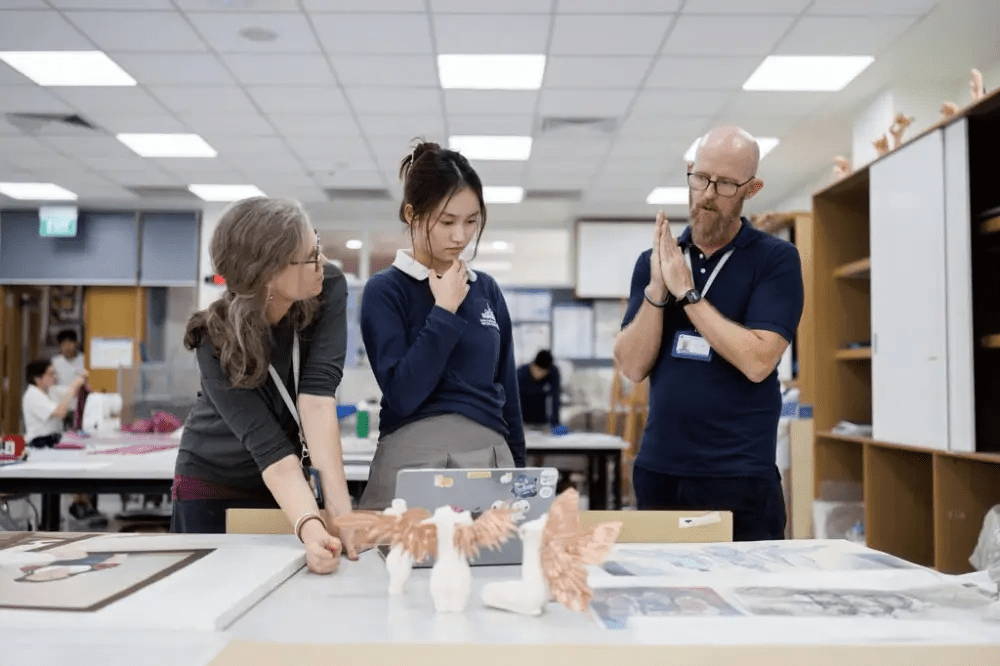
Our “Culture of Care” ensures teachers act as mentors who provide personalized support tailored to individual learning styles. With an average of 9+ years of experience, our educators are not just instructors; they are partners in the student’s academic journey.
This mentorship is critical for navigating the complexities of the IB, offering students tailored advice on how to approach difficult concepts and manage their study load.
The ISHCMC Advantage: A Proven Pathway to IB Success
The strategies for studying are most effective when applied within a supportive environment. At ISHCMC, we provide the resources necessary to translate hard work into tangible results.
Proven Academic Excellence and Results
The study strategies employed by our students lead directly to world-class academic outcomes that consistently outperform global averages.
In 2025, the ISHCMC average IB score was 34 points, exceeding the global average of 30 points.
Furthermore, 57% of our students earned bilingual diplomas, double the international average of 23%. As of February, the Class of 2026 also achieved remarkable success, earning $112M USD in scholarships and receiving 2,068 university offers from 16 countries.
Impressively, 98% of our students secured places in their top-choice universities.
Flexible Pathways to Graduation
Recognizing that every student’s learning journey is unique, we offer flexible pathways that accommodate different strengths.

With three graduation pathways, Full IB, IB Courses, and High School Diploma, students can choose the rigor that fits their profile. This inclusive approach means “how to study for IB” looks different for every student, and we accommodate these differences better than a “one size fits all” approach.
Despite this inclusivity, we maintain high standards; our MYP students surpass US norms by up to 20 RIT points in Math, demonstrating that flexibility does not compromise rigor.
A Supportive Community for IB Learners
From our award-winning library facilities to our dedicated university counseling team, ISHCMC provides comprehensive support.
We believe students should not be defined solely by grades but nurtured to become well-rounded, confident individuals. Our “One Community, Two Campuses” approach ensures a seamless transition from MYP to DP, which is critical for long-term study success.
By maintaining a cohesive culture across primary and secondary levels, we prepare students for the rigors of the IB from a young age.
Join a Community Dedicated to Your Child’s Growth
Navigating the challenges of the IB requires understanding the curriculum, managing time, prioritizing wellbeing, and utilizing community resources. While the IB is demanding, knowing how to study for IB makes the journey manageable and rewarding.

We invite parents to contact our admissions team to learn more about the application process and how we tailor learning to individual student needs.