How International Schools Prepare Students for University
Getting into the right university is one of the biggest milestones in a student’s life. But for families at international schools, the process involves navigating multiple university systems, scholarship applications, and personal statements, all at the same time.
At ISHCMC, around 1,500 students from over 60 countries are enrolled each year, including more than 700 in Primary School and over 800 in Secondary School. Each student brings different ambitions, strengths, and goals.
University counselling exists to walk alongside each of them, offering direct guidance to help students explore career options and find the university path that truly fits who they are.
What University Counselling at International Schools Actually Involves
University counselling is much more than helping students fill out applications. It is a structured, ongoing process that supports students from early high school right through to their final university decisions.
Here is what high-level international university counselling actually involves behind the scenes.
1. Multi-System Strategic Mapping
Unlike a domestic high school counselor who usually specializes in one national system, an international school counselor must be a chameleon across global higher education frameworks. They map out distinct strategies for each region:
- The US “Holistic” Strategy: Crafting a cohesive personal narrative, optimizing extracurricular lists, and advising on Early Decision (ED) / Early Action (EA) data-driven strategies.
- The UK “Academic Depth” Strategy: Ensuring the student’s UCAS personal statement focuses 80% on pure academic super-curriculars, and managing registrations for specific admissions tests (like the ESAT, UCAT, or TMUA).
- The European/Asian Strategy: Navigating strict subject-specific prerequisites (e.g., specific IB Higher Level courses or AP scores required for Dutch or German research universities).
2. Managing the "Best Fit" Reality Check
A massive portion of the job is managing expectations and dealing with the psychological weight of the college admissions race. Counselors act as data-driven anchors for families navigating high-stress environments.
Counselors spend months moving families away from pure “brand-name chasing” toward “Best Fit” balancing academic rigor, campus culture, financial considerations, and long-term career goals.
3. Advocacy and School Profiling
A university cannot accurately evaluate a student from an international school without context. The counselor is responsible for writing the School Profile – a critical document sent with every application that translates the school’s grading system, curriculum rigor (IB, AP, A-Levels), and demographics for global admissions officers.
Furthermore, counselors write comprehensive, narrative Counselor Recommendation Letters (primarily for US/global holistic admissions) that advocate for the student’s character, leadership, and impact within the school community.
4. Curating the Global Network
International counselors maintain direct lines of communication with university admissions offices worldwide.
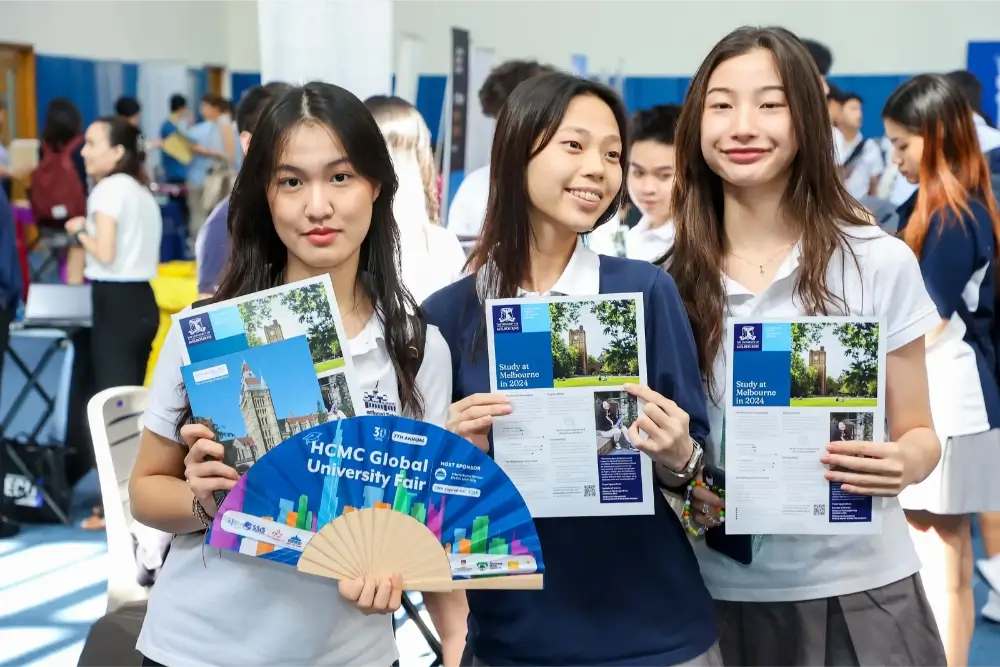
- They host University Fairs and individual admissions visits on campus.
- They advocate directly for students during “borderline” admissions cases by picking up the phone to clarify context with regional admissions directors.
- They track historical admissions data internal to the school to identify trends (e.g., “How does our school’s 38 IB points fare at Imperial College London vs. Northwestern?”).
5. Timeline and Systems Architecture
The logistics are immense. Counselors manage platforms like Cialfo, MaiaLearning, or Naviance to sync school documents with university portals (Common App, UCAS, OUAC, etc.). They orchestrate a multi-year timeline that starts long before senior year:
| Grade / Year | Core Focus |
| Grade 9 / 10 (G3/G4) | Subject selection advice (IGCSE/Pre-IB/Pre-AP); encouraging meaningful extracurricular exploration over “resume padding.” |
| Grade 11 (DP1/As/Junior) | Deep-dive research, standardized testing strategy (SAT/ACT/IELTS), building the initial long list of universities, and starting essay workshops. |
| Grade 12 (DP2/A2/Senior) | Execution phase. Finalizing lists, writing/polishing essays, mock interviews, managing internal deadlines, and submitting applications. |
How International Schools Support Students Across Global University Systems
Applying to universities across multiple countries at the same time is genuinely complex. Each system has its own deadlines, requirements, and evaluation criteria.
Strong international school counsellors are experienced in navigating all of these simultaneously.
Navigating US, UK, and Asian university applications simultaneously
US applications typically involve multiple essays, extracurricular profiles, and standardised test scores. UK applications go through UCAS with a single personal statement. Asian universities, including South Korea’s SKY institutions, have their own timelines and requirements.
A skilled counsellor helps students manage these differences without missing deadlines or submitting generic applications.
The role of IB results and predicted grades in global admissions
For students in the IB Diploma Programme, predicted grades play a major role in applications. Universities in the UK make conditional offers based on these predictions, while US universities review them as part of a holistic profile.
Counsellors work closely with teachers to ensure predicted grades are accurate and well-supported, and to help students understand exactly what is expected of them for each offer they receive.
The Role of Scholarships and Financial Guidance in University Counselling
Scholarships can significantly reduce the financial pressure of an international university education. Yet many families do not realise how central counselling support is to achieving strong scholarship outcomes.
Merit-based vs need-based scholarships for international graduates
Merit-based scholarships reward academic achievement, extracurricular involvement, and leadership. Need-based scholarships are determined by financial circumstances and vary widely by institution and country.
Most international school graduates are primarily eligible for merit-based awards. A good counsellor helps students identify which scholarships align with their profile and supports them in presenting their achievements effectively.
How Strong Counselling Directly Increases Scholarship Outcomes
When students have clear, well-articulated narratives about their academic journey, values, and goals, their applications stand out. Counsellors help students develop this narrative across their essays, interviews, and recommendation letters.
The results speak for themselves. At ISHCMC, the Class of 2025 received a total of $56 million USD in scholarships, with an average scholarship value of $813,000 USD per student.
Class of 2026 Achievement Means
The Class of 2026 is progressing through the same structured Future Pathways programme that produced those results. With counselling beginning in Grade 9 and continuing through graduation, students are on track to achieve similarly strong outcomes in university placements and scholarship awards.
ISHCMC Future Pathways - Evidence of Close Student-Counselor Collaboration
At ISHCMC, university and career counselling is not an add-on. It is embedded into every student’s experience from Grade 9 onward through the Future Pathways programme.
The Class of 2025 set a strong benchmark by the end of the admissions cycle:
- 98% of students received offers from their top choice universities
- 1,187 university offers from institutions across 22 countries, averaging 14 offers per student
- $56 million USD in total scholarships, averaging $813,000 USD per student
- Admissions to 7 of the top 10 QS-ranked universities, including Harvard, Yale, UPenn, and LSE
- Placements at SKY universities in South Korea
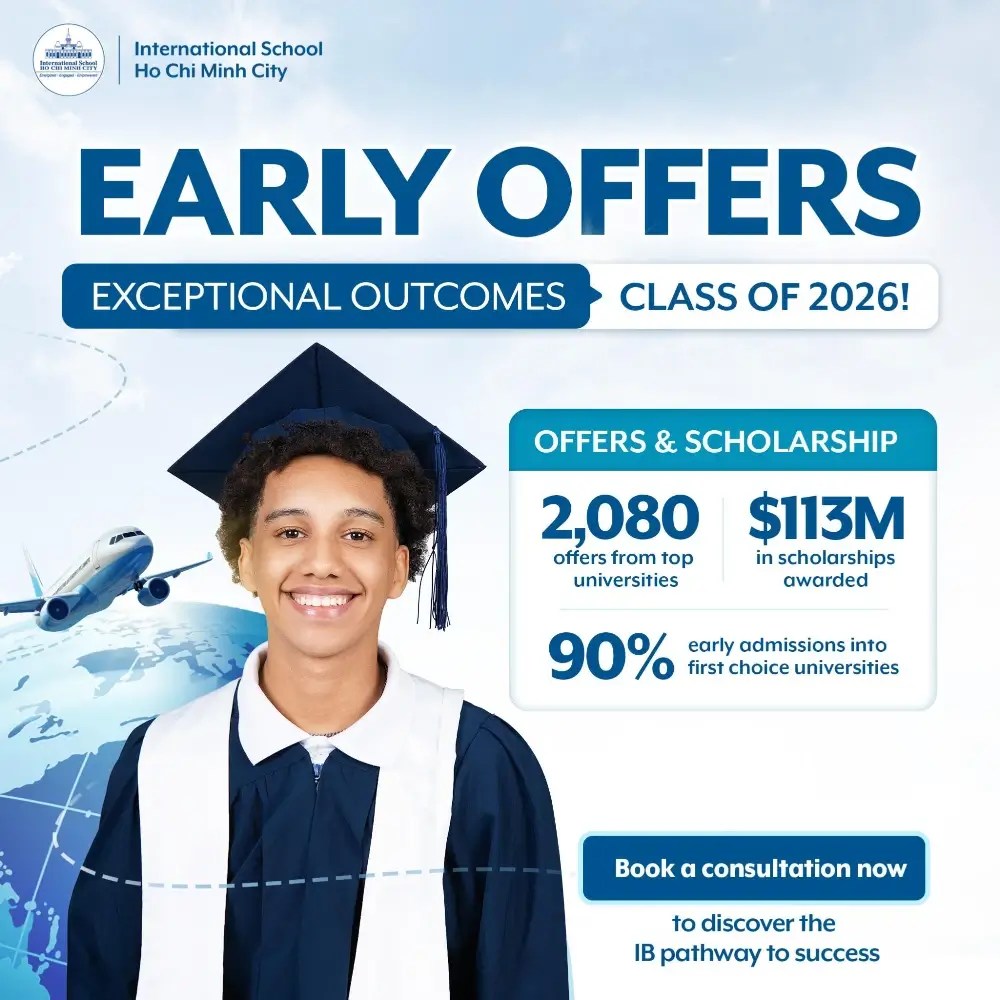
The Class of 2026 is already surpassing those numbers, even before the admissions season closes. Early offer results show:
- 2,080 university offers received, compared to 1,187 for the full Class of 2025
- $113 million USD in scholarships awarded, nearly double the previous year
- 90% of students secured early admissions into their first choice universities
These early figures show what years of structured, personalised counselling starting from Grade 9 can achieve: students arrive at application season not just ready, but ahead.
ISHCMC offers three high school pathways, including the full IB Diploma, individual IB courses, and the ISHCMC High School Diploma, giving each student the flexibility to pursue the route that best fits their goals. With 34 IB subjects on offer, the most in Ho Chi Minh City, students have a wide range of options when building their academic profile for university applications.
FAQs
1. At what grade should my child start meeting with a university counsellor?
Grade 9 is the recommended starting point. Early sessions focus on exploration and subject choices, which directly affect university eligibility later on.
2. Can a school counsellor help with scholarship applications in addition to university admissions?
Yes. At schools like ISHCMC, counsellors actively support students in identifying relevant scholarships and compellingly presenting their achievements.
3. How do university counsellors at international schools build relationships with admissions officers?
Through regular communication, campus visits, and ongoing institutional partnerships. These relationships help counsellors advocate effectively for their students.
4. Is university counselling different for students applying to non-English-speaking countries?
Yes. Each country has its own system. Experienced international school counsellors are familiar with requirements across the US, UK, Europe, Asia, and beyond.