How to Prepare for Engineering in High School: A Complete Guide
Students must master advanced mathematics and science while engaging in hands-on problem-solving to successfully learn how to prepare for engineering in high school.
Engineering remains a highly competitive and impactful career path. Many students delay prerequisites until senior year, missing crucial building blocks. A strategic approach balancing rigor with practical application is essential.
The Core of Engineering: Physics and Mathematics Fundamentals
The core of engineering lies in applying fundamental physics, mathematics, and material sciences to solve complex, real-world problems through design, innovation, and systems-level thinking.
- Physics: This branch of science provides the framework for understanding energy, forces, and the physical properties of matter. It is essential for designing safe structures, efficient machines, and sustainable energy systems.
- Mathematics: As the language of engineering, mathematics enables precise modeling and analysis. Mastery of calculus and statistics allows engineers to quantify variables and predict system behaviors accurately.
See how ISHCMC prepares students to master these essential disciplines below.
How ISHCMC Prepares High School Students for Engineering
We strategically prepare students for engineering pathways starting from Grade 6 and intensify this support through Grade 10, establishing a solid foundation before the rigors of the IB Diploma. This approach ensures that by the time students select their IB subjects, they possess the maturity and technical baseline to excel in Higher Level courses.
=> You might be interested in: The ISHCMC College & University Counseling helps students prepare for the future.
Here are the specific steps we take to ensure success.
Step 1: Build a Rigorous Academic Foundation with the Right Curriculum
Establishing a strong academic base requires students to enroll in high-level Mathematics and Science courses, as these subjects constitute the non-negotiable foundation of engineering.
University admissions officers prioritize applicants who challenge themselves with rigorous coursework, viewing these choices as a clear signal of readiness for the demands of undergraduate programs.
- Mathematics and Science Prerequisites: Students must complete Calculus and Physics to demonstrate capability in engineering fundamentals. Chemistry is also vital for branches like chemical or materials engineering.
- Curriculum Choice: The IB Diploma Programme is particularly effective due to its emphasis on inquiry and depth. We nurture students in this rigorous environment. In the 2024-2025 academic year, ISHCMC students surpassed US norms in Math by up to 20 RIT points, demonstrating exceptional STEM readiness.
- IB Diploma Breadth: The IB Diploma allows students to take Higher Level (HL) Math and Science courses critical for engineering. These courses provide depth equivalent to first-year university classes.
Step 2: Gain Practical Experience Through Extracurriculars
Universities seek “tinkerers” and problem-solvers who apply theoretical knowledge to tangible projects, rather than students who simply excel at taking tests. Gaining practical experience demonstrates genuine passion and provides concrete examples of problem-solving abilities.
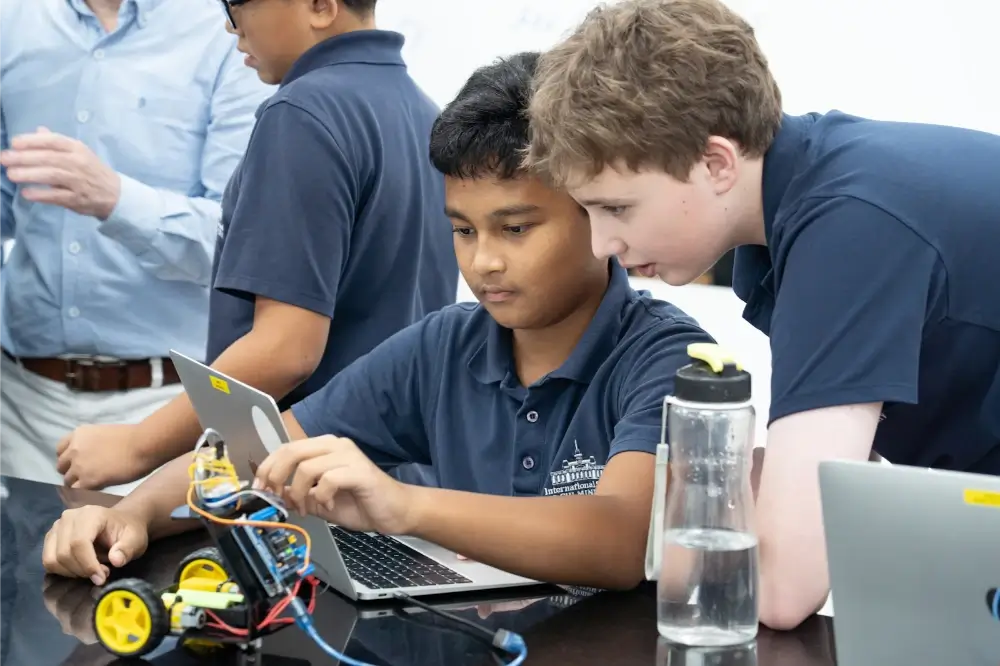
- Robotics and STEM Clubs: Participation in Robotics clubs and coding workshops allows students to apply engineering principles in collaborative settings.
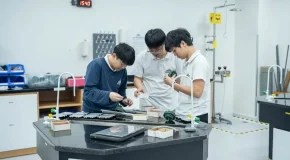
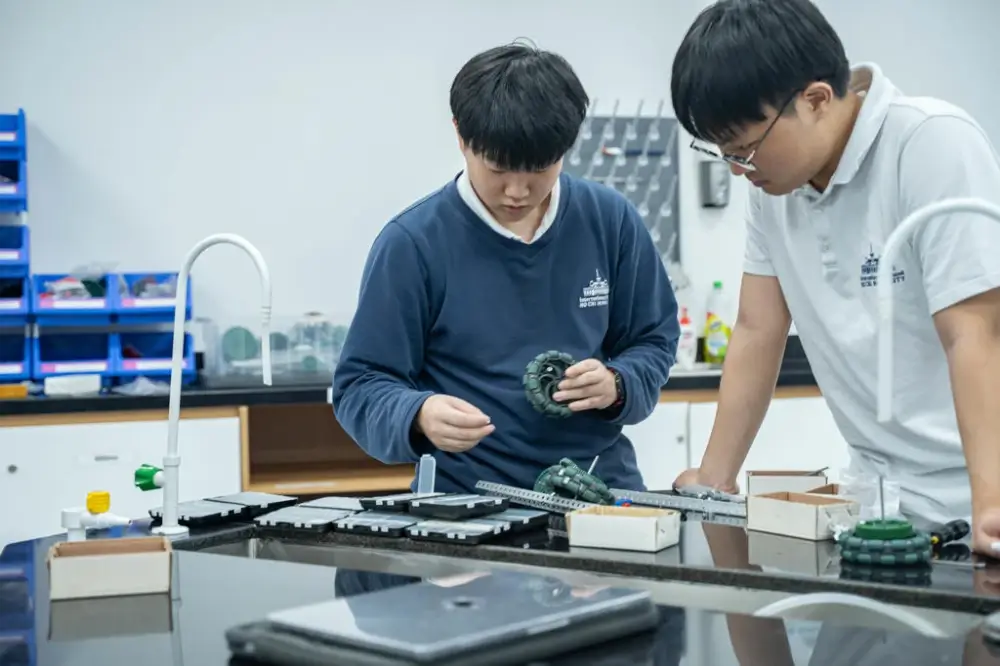
- ISHCMC Facilities: We offer purpose-built design studios and hands-on maker spaces where students can prototype. We provide over 95 After School Activities (ASAs), including technology and innovation-focused clubs.
- Design Technology: Our IB curriculum includes “Design Technology” courses that teach the engineering design cycle, guiding students from identifying needs to testing prototypes.
Step 3: Develop Essential Soft Skills for Engineers
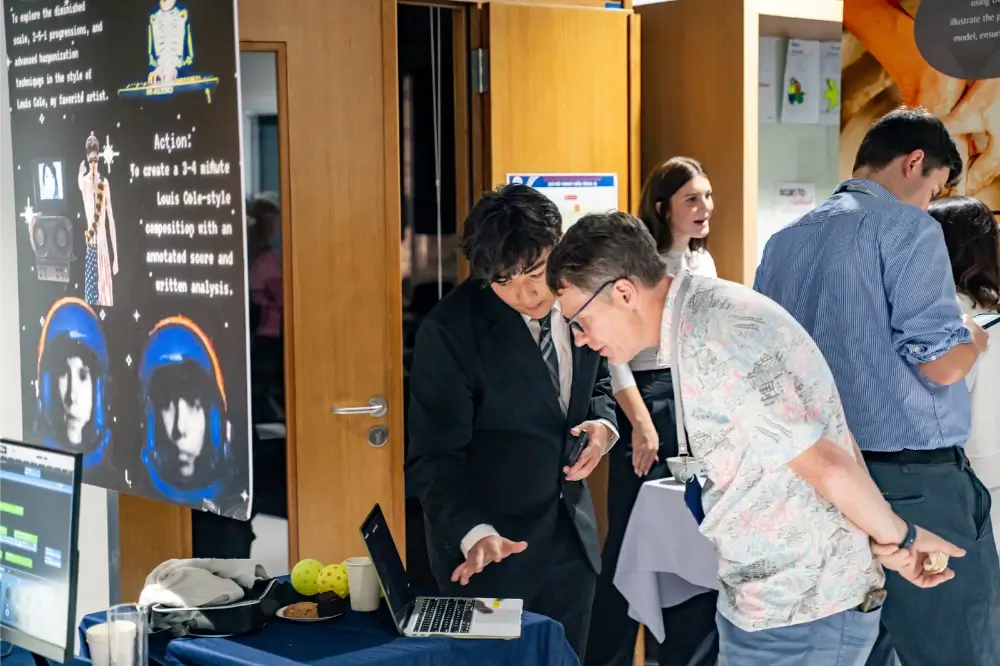
Success in engineering requires a robust set of soft skills including critical thinking, resilience, empathy, and collaboration. Modern engineering is inherently collaborative, making the ability to work in diverse teams a top admission criterion.
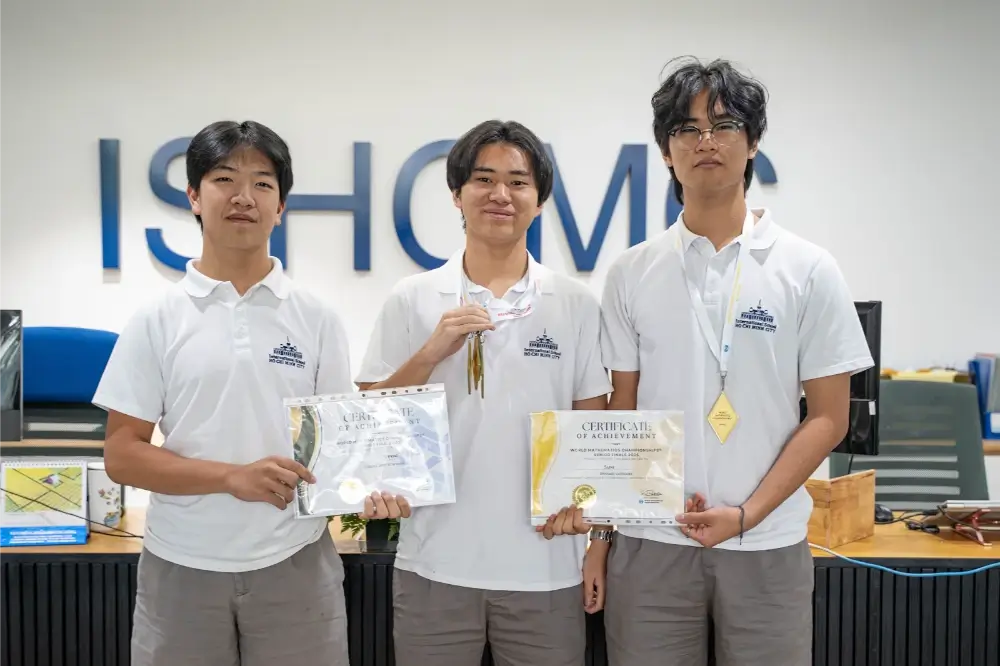
At ISHCMC, we prioritize these competencies through our POSISH framework (Positive ISHCMC). This whole-school social-emotional learning program fosters curiosity, resilience, and integrity, qualities essential for an engineering degree.
Furthermore, our partnership with University College London (UCL) on a multimedia reflection research project proved that our students develop stronger communication skills, showing significant Language Usage growth through innovative tech integration.
Step 4: Craft a Winning Engineering Portfolio
A winning engineering portfolio strategically combines academic records, personal statements, and recommendations to tell a cohesive story of potential.
Students must begin planning early, ideally starting university research in Grade 9 or 10, to align course selection with dream schools. Early preparation allows students to secure strong recommendations.
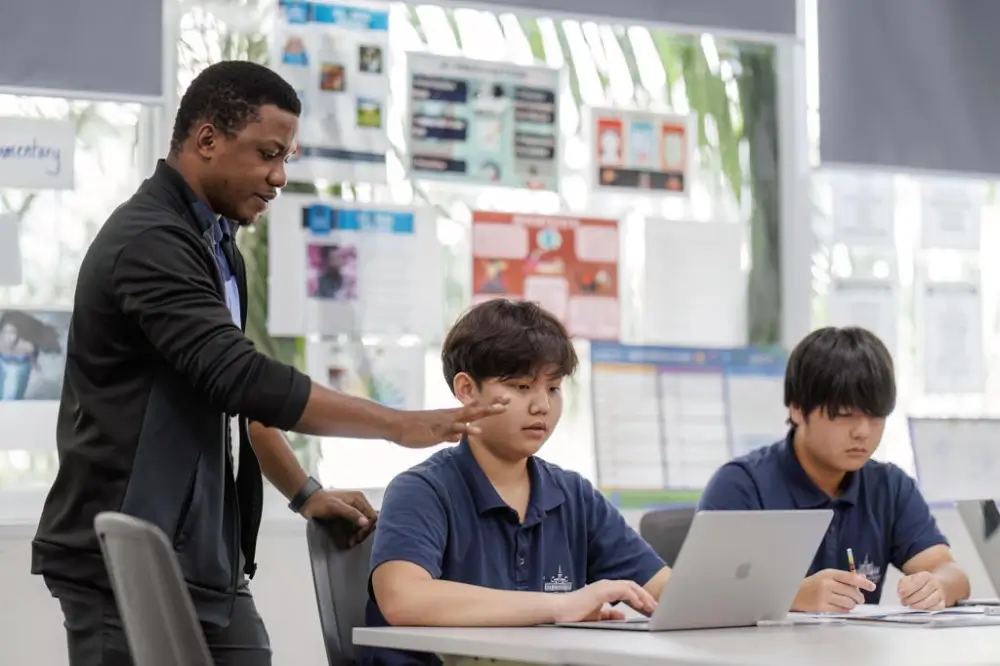
We support this through 1:1 university counseling starting from Grade 9. The success of this approach is evident in the Class of 2025: 98% of our students gained acceptance into their top-choice universities, securing $56M USD in scholarships.
Our alumni have successfully entered prestigious institutions such as Harvard, Oxford, Yale, and Seoul National University.
Why ISHCMC is the Top Choice for Aspiring Engineers
We provide an environment where academic excellence meets holistic support, creating the ideal ecosystem for future engineers. Our comprehensive approach ensures students are prepared to lead in the global engineering landscape.
World-Class Facilities for Innovation
The physical environment plays a crucial role in engineering education; students require professional-grade spaces to learn professional skills. We ensure students have access to resources that mirror real-world environments.
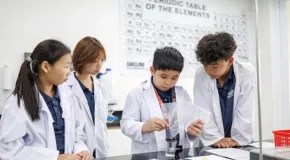
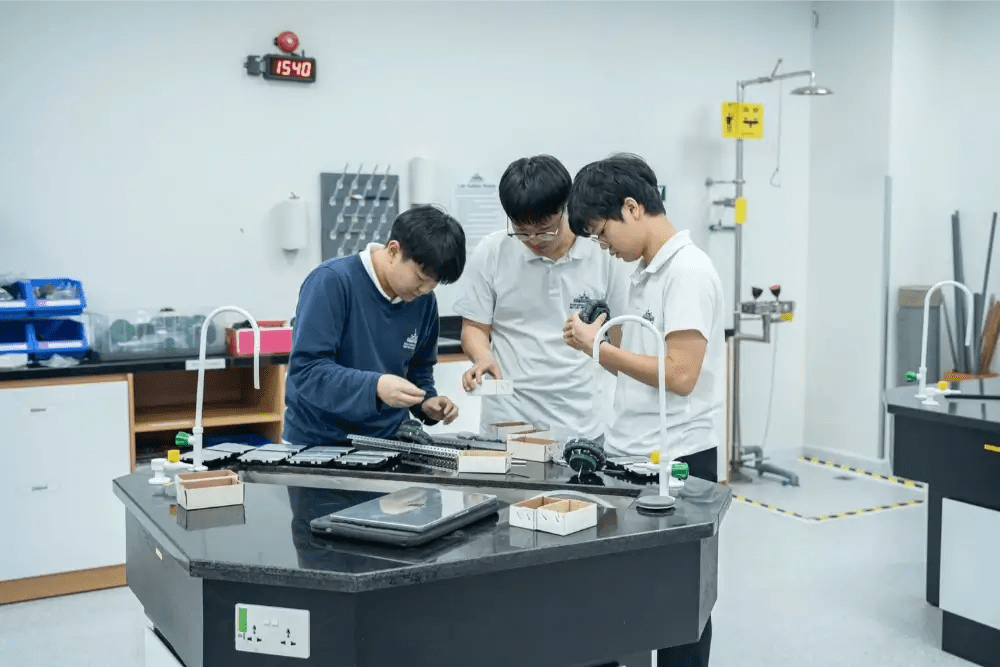
- Specialist Science Labs: Our campus features specialist science labs equipped for advanced experimentation in physics, chemistry, and biology.
- Design Technology Studios: We offer dedicated design technology studios where students can engage in computer-aided design (CAD) and manufacturing processes.
- Maker Spaces: Our hands-on maker spaces allow students to build physical prototypes, fostering a culture of innovation and practical application.
Proven Outcomes in STEM Subjects
Data-driven results validate the quality of our educational framework, proving that our methods translate into tangible academic success. Our students consistently outperform global benchmarks, giving them a competitive edge in university admissions.
We are proud to report an average IB score of 34 points, surpassing the global average of 30.
Additionally, 57% of our students earn a bilingual diploma, more than double the international average. This bilingual advantage is highly sought after in global engineering firms, where cross-cultural communication is paramount.
These statistics confirm that our students possess the academic discipline and intellectual agility required for rigorous engineering programs.
A Supportive Community for Growth
Engineering preparation should not come at the cost of a student’s mental health; burnout is a significant risk for high achievers in STEM fields. We balance academic pressure with emotional support to ensure our students remain healthy and motivated.

Our “Culture of Care” and the POSISH program ensure that students are supported socially and emotionally while they pursue rigorous academic goals.
We believe that a supportive community is the foundation of resilience, helping students navigate the challenges of a demanding curriculum without compromising their well-being.
This holistic support system empowers students to take intellectual risks and persevere through academic challenges.
Secure Your Child’s Engineering Pathway Today
Waiting until senior year to focus on prerequisites leaves students underprepared for competitive university programs. A strategic approach to preparing for engineering in high school ensures a balance of academic rigor, practical application, and resilience.
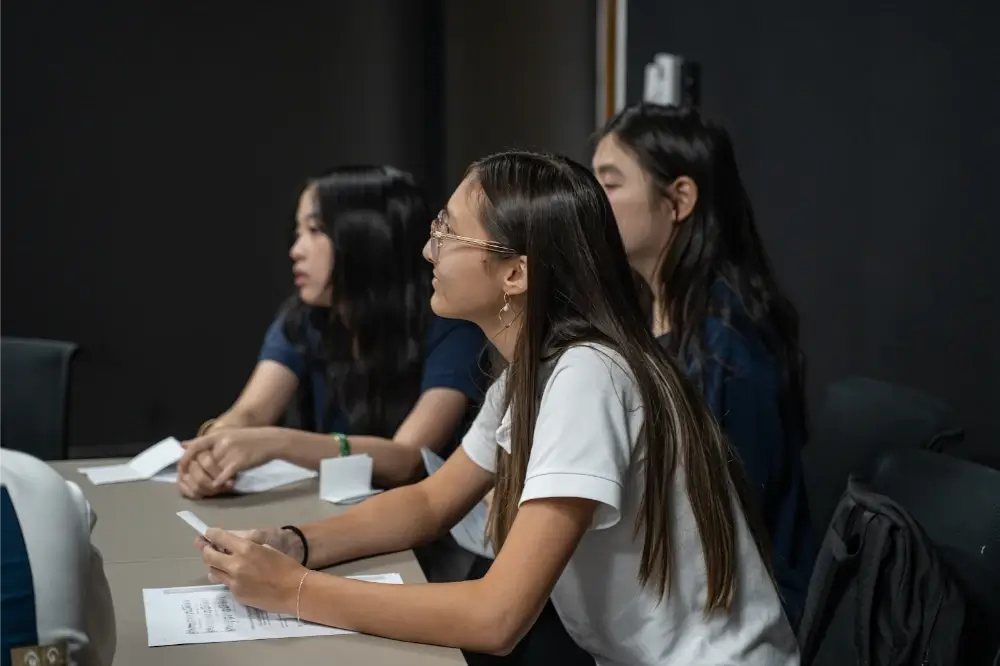
We invite you to join our community. Apply to ISHCMC to give your child the definitive advantage in their engineering aspirations. Schedule a campus tour today to see our design labs and maker spaces firsthand.
FAQs
Parents frequently ask specific questions regarding how to prepare for engineering in high school to ensure they guide their children correctly.
1. What math classes should my child take for engineering?
Students should aim to complete Calculus and Statistics before graduation, as these form the basis of engineering analysis. Taking these courses at Higher Level (HL) in the IB curriculum provides the best preparation.
2. Is the IB Diploma good for engineering applications?
Yes, the IB Diploma is highly regarded for its depth in Higher Level Math and Science. The program’s focus on inquiry and the Extended Essay mirrors the research skills needed in engineering.
3. Are extracurricular activities necessary for engineering admissions?
Yes, top engineering schools look for evidence of hands-on experience and passion beyond the classroom. Activities like robotics or personal maker projects demonstrate practical problem-solving skills.