



How Making Sense of Our Environment Helps Us Develop
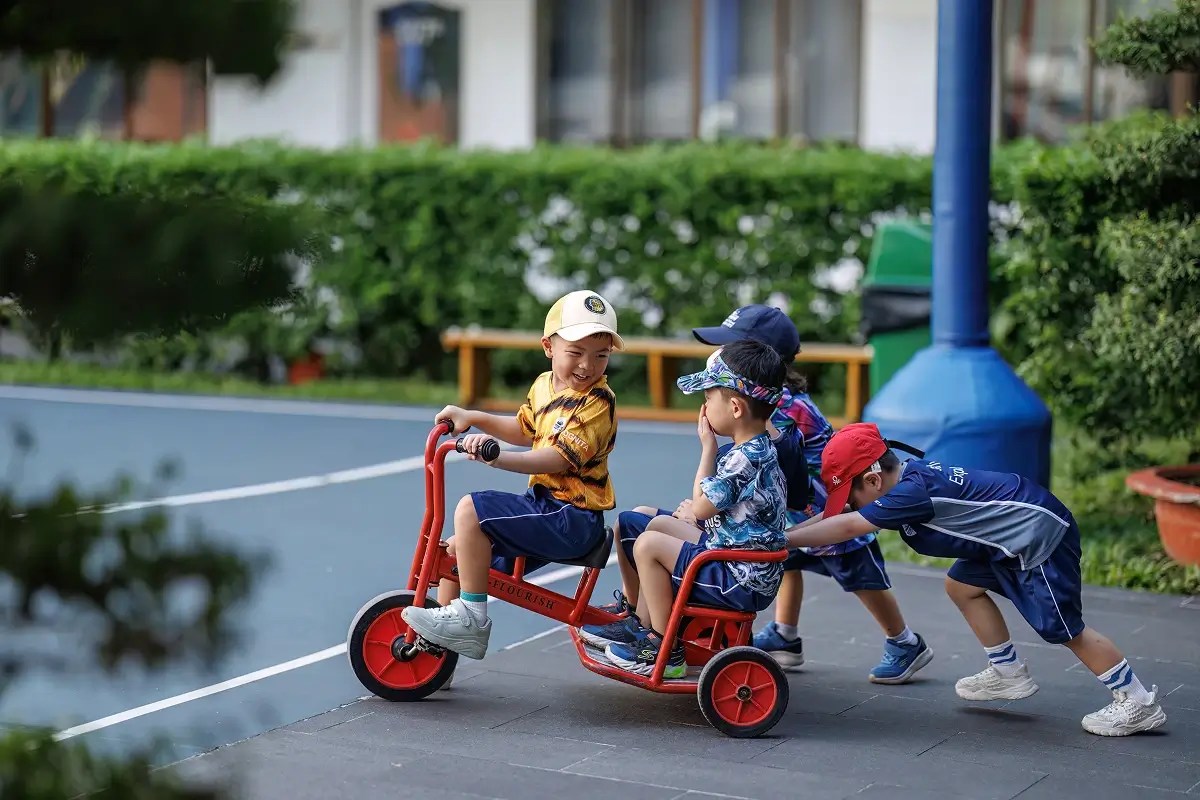
Looking at a small bug crawling in the grass through a microscope. Feeling the sun on our skin at the ISHCMC Adventure Playground. Listening to music notes from the piano. These activities are intentionally created to engage our children’s senses, allowing them to interact with and make sense of the world around them. Our teachers use sensory play, which is any activity that stimulates the senses, to help our students learn and grow.
What is sensory play?
Sensory play refers to any activity that engages a child’s senses, like sight, sound, smell, touch, and taste, along with deeper senses like movement and body awareness. Rather than passive learning, sensory play invites active exploration, curiosity, and problem‑solving.
Learning through exploration comes naturally to young children. Through their natural engagement with the environment, children learn through exploration, curiosity, and problem-solving. They use their senses and the cues from their environment to develop understanding.
Understanding the Seven Senses and the Child’s Senses Development
The Singapore Brain Development Centre emphasises the importance of developing our children’s seven senses through sensory integration. Most of us are aware of the basic 5 – smell, sight, hearing, touch, and taste. Two additional senses are crucial for sensory integration, enabling children to organise input and formulate their actions. One of those senses is proprioceptive.
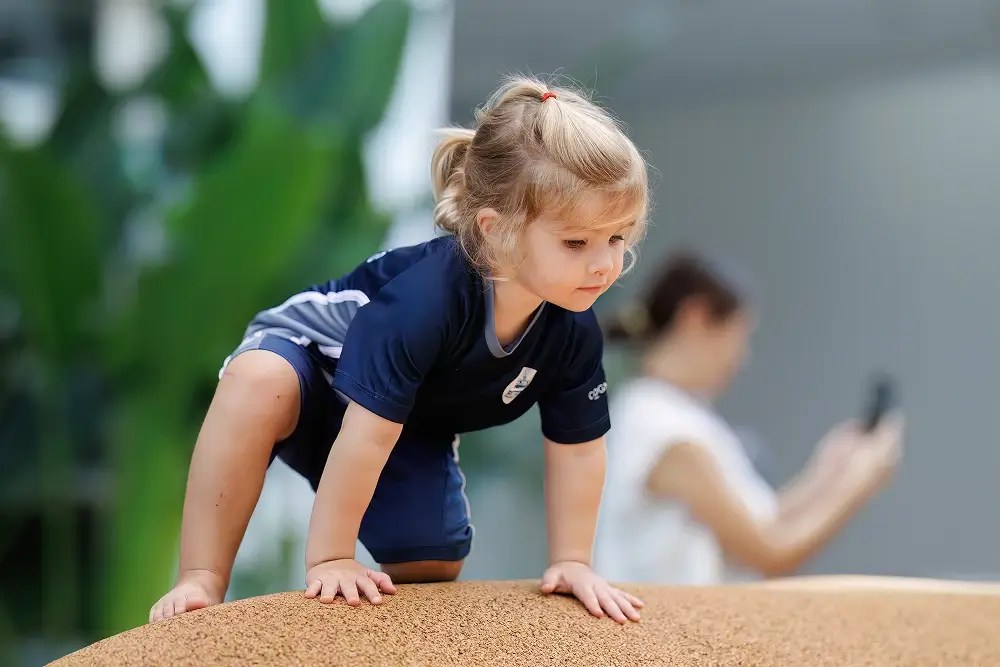
Proprioceptive sense is the “body’s ability to interpret sensations of movement from our muscles, joints, and ligaments.” Our body takes in information from our nerves to help us with positioning and movement. Our nerves help us to know when to push, pull, squeeze, climb, and even stretch.
The other additional sense is the vestibular sense. The vestibular system is focused on the inner ear canals. Our inner ear canals collect information and help us with walking, maintaining our balance, and visually tracking objects in our environment.
Our children engage with the people and environment around them each day to integrate the various sensory inputs. The process of integration can be challenging, but it is necessary for all children to develop their motor and cognitive skills.
How Parents Can Support Sensory Development
There are many strategies parents can employ when children are young to support their motor development.

Parents can support the development of fine motor skills by:
- Encouraging play through activities such as playing with playdough, stringing beads, coloring, drawing, painting, and building with blocks.
- Focusing on any activity that requires precise movements with hands and fingers, such as buttoning clothes or picking up small items with tweezers or chopsticks.
Parents can support the development of gross motor skills by:
- Utilizing large muscle groups to improve balance and coordination.
- Encouraging activities, such as swimming or running, and sports to build a foundation for complex movements.
Creating sensory play opportunities is essential to support our children’s brain development as well. Sensory play boosts our children’s brain development by building nerve connections that enhance executive functioning skills and language development. Experiences in the environment lay the foundation for complex skills, including memory, focus, and concentration.
Sensory Play and Emotional Regulation
Sensory play also supports emotional regulation and behavior.
Children are taught how to activate their senses to self-soothe through various calming activities. When you walk into one of our EE4 classrooms, you may see a class playing with feathers. A feather gently floating to the ground or the way the softness feels against our hands and arms is a way for our students to use their senses to identify what calm could look and feel like.
When students are feeling worried or possibly dysregulated, they can be directed to think about the feather – visualize the color, recall what it feels like, and use their mind’s eye to imagine it floating gently to the ground. By coaching children to identify concrete objects that remind them of their senses, they can regain control of their feelings and regulate their emotions.
A Learning Space Designed for the Senses Development
At ISHCMC, our Early Years learning spaces are thoughtfully designed to support sensory development through natural, calming, and engaging surroundings. Every detail, from materials to layout, is purposeful.
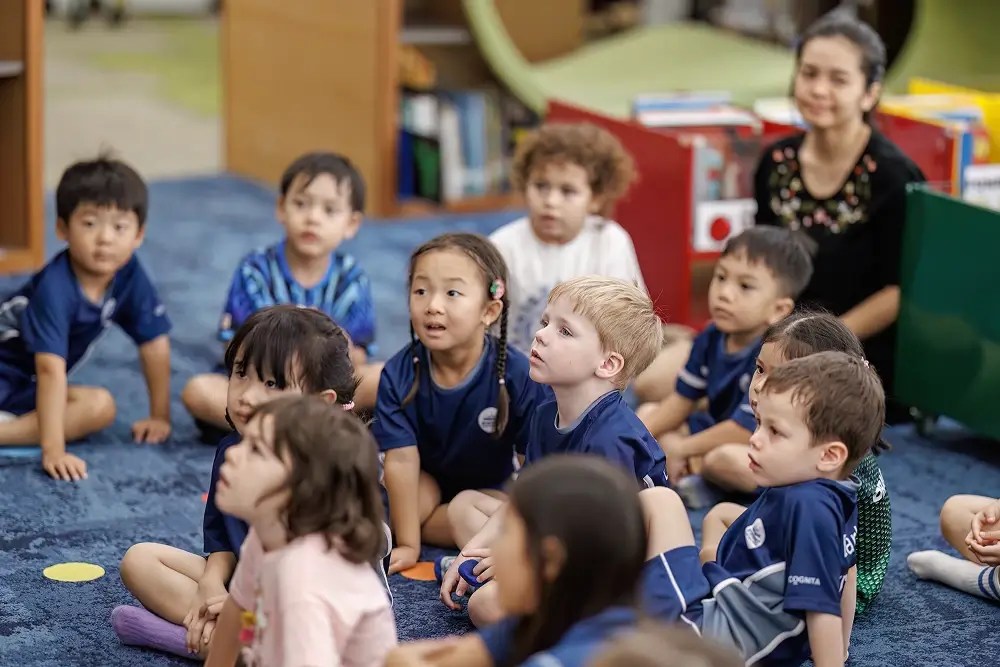
Our environment includes:
- Large glass doors that welcome natural light and create a seamless connection to the outdoors.
- Textured walls and surfaces in hallways and classrooms that invite children to explore through touch
- Dedicated calming corners in every room where students can pause, reflect, and self-regulate when needed
Every corner is intentional. Each space encourages children to use their senses to feel grounded, curious, and confident, creating a strong foundation for meaningful learning and emotional growth.
FAQs About Sensory Play
Why are proprioception and vestibular senses important?
These “hidden senses” help children move confidently, maintain balance, and understand their body’s position in space, all vital for learning and development.
Can sensory play support emotional development?
Yes. Sensory experiences help children learn to self-soothe, manage emotions, and regulate behavior through physical awareness and calming sensory cues.
How does ISHCMC support sensory development?
Our Early Years curriculum and environment are intentionally designed to promote sensory integration through purposeful play, inquiry-based learning, and responsive classroom design.