IB vs STEM Schools: What Every Parent Should Know
Choosing the right educational path is one of the most significant decisions a parent can make. Between STEM-focused schools and International Baccalaureate (IB) institutions, many families find themselves weighing two compelling models. Both promise to prepare students for the future, but each does so in very different ways. If you’re searching “IB vs STEM” to find clarity, this guide will break it down for you and show how schools like International School Ho Chi Minh City (ISHCMC) offer an innovative bridge between the two
What Is an IB School?
An International Baccalaureate (IB) school offers far more than academic excellence. It nurtures curious, capable global citizens. Designed for students aged 3 to 19, the IB framework emphasizes inquiry, intercultural understanding, and personal growth. At its core are three rigorous programs: the Primary Years Programme (PYP), Middle Years Programme (MYP), and Diploma Programme (DP).
Unlike traditional systems, IB doesn’t just teach content. It teaches students how to learn through deep reflection, ethical reasoning, and real-world application. Programs include:
- Theory of Knowledge (TOK): Encourages philosophical thinking and interdisciplinary insight
- Extended Essay (EE): A 4,000-word independent research project
- Creativity, Activity, Service (CAS): Projects that develop empathy and leadership
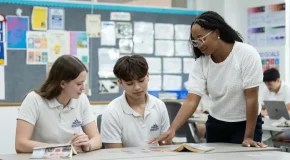
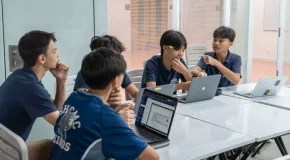
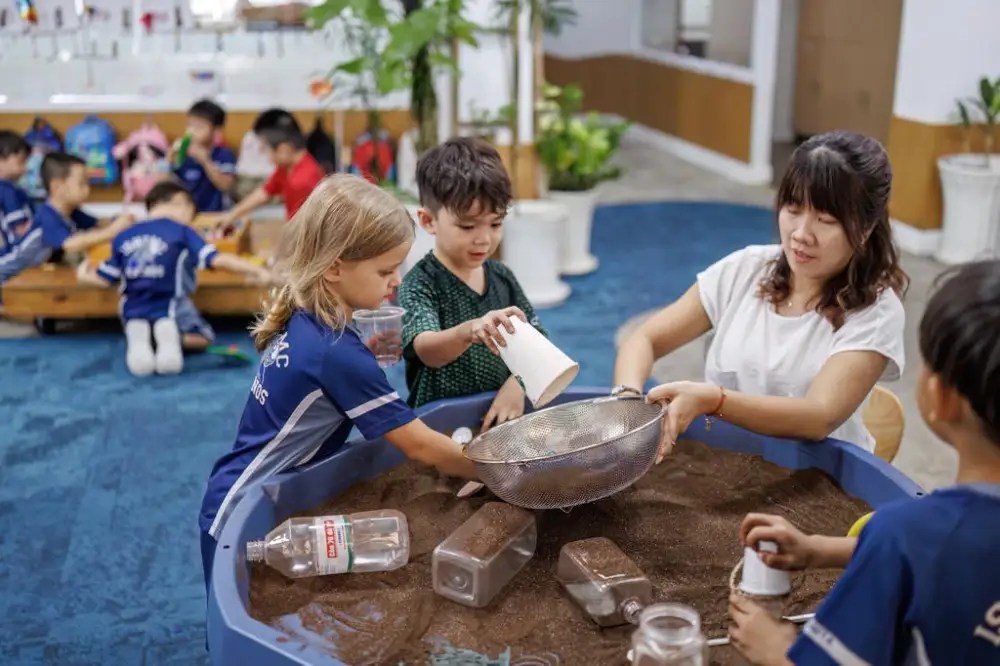
At schools like ISHCMC, this approach is brought to life through diverse cultural experiences, technology integration, and project-based learning that mirrors real-world problem-solving. The result is students who are not only academically capable but also confident, empathetic, and internationally minded.
What Is a STEM-Focused School?
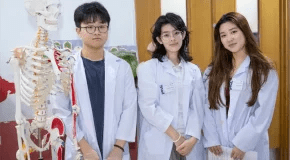
STEM schools specialize in developing student mastery in Science, Technology, Engineering, and Mathematics. These schools often offer specialized tracks for engineering, robotics, programming, or biotech. These are disciplines that align with modern, high-demand career fields.
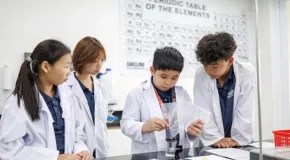
Students in STEM schools often learn through hands-on labs, design-thinking challenges, and technical projects. The environment encourages innovation, experimentation, and logical problem-solving. These schools tend to appeal to learners who are:
- Technically inclined
- Comfortable with structure and measurable outcomes
- Eager to specialize in a specific field early on
The biggest advantage of a STEM model is its depth. Students dive into complex technical skills from an earlier stage. However, this often comes with less focus on the arts, humanities, or global citizenship unless the school supplements it.
IB vs STEM: Side-by-Side Comparison
| Category | IB School | STEM-Focused School |
|---|---|---|
| Curriculum Scope | Broad, interdisciplinary across six subject groups (languages, humanities, sciences, arts, maths, electives) | Narrower focus on science, math, and technology-related subjects |
| Skill Development | Emphasizes inquiry, communication, empathy, reflection, research, and global awareness | Emphasizes analytical reasoning, coding, data literacy, design thinking, and technical problem-solving |
| Learning Approach | Student-led inquiry, conceptual learning, interdisciplinary connections, real-world application | Applied and technical with hands-on labs, structured tasks, and direct problem-solving |
| Assessment Style | Internal assessments, essays, projects, presentations, extended research (e.g. Extended Essay, TOK) | Frequent testing, lab reports, project outcomes, exams, technical performance-based tasks |
| Global Recognition | Recognized worldwide by top universities for holistic academic rigor and soft skills | Recognition varies by institution; strong performance in technical fields can be highly regarded |
| Ideal Student Fit | Curious, independent, globally-minded learners who enjoy academic and personal balance | Technically inclined, logical thinkers who prefer specialization and measurable performance |
| University Preparation | Prepares students for a wide range of disciplines, encourages reflective learning and essay-based assessments | Prepares students for careers in engineering, IT, computer science, and technical majors |
| Personal Development | Prioritizes social-emotional learning, ethical decision-making, creativity, and leadership | Focus may lean more toward academic and technical mastery than holistic development |
| Creativity & Arts | Visual arts, drama, music, design, and service learning are integrated and valued | May not offer as many arts programs unless explicitly included |
| Collaboration & Communication | Strong focus on group projects, peer collaboration, presentations, and global thinking | Collaboration often based on engineering teamwork or coding groups; less emphasis on personal expression |
| Real-World Skills | Students learn to think critically, work cross-culturally, and reflect on impact | Students are trained to solve tangible, often tech-based problems using tools and logic |
| Teaching Philosophy | Teachers act as facilitators of student-driven inquiry, fostering independent thought and agency | Teachers often act as subject-matter experts guiding technical proficiency and execution |
| Technology Integration | Technology is integrated as a tool for inquiry and expression (e.g. digital storytelling, AI, research) | Technology is a core subject and goal (e.g. robotics, programming, hardware/software mastery) |
| Language Learning | Multilingual learning is built into the program with international-mindedness as a pillar | Often less emphasis on foreign languages unless required by curriculum |
| Flexibility in Pathways | Students can mix IB courses with high school diploma programs for a customized learning path (like at ISHCMC) | May offer specialized STEM tracks but fewer interdisciplinary options |
In essence, the IB framework guides students to learn how to think critically, reflectively, and ethically across a wide range of disciplines, encouraging them to make connections between subjects and apply their learning to real-world contexts. In contrast, STEM schools often teach students what to think within specific domains, prioritizing technical mastery, subject-specific knowledge, and hands-on problem-solving in fields like engineering, coding, and mathematics.
How ISHCMC Bridges Innovation and Inquiry
While ISHCMC is not a STEM school, it delivers STEM-inspired learning within the IB framework, and that is exactly what sets it apart.
As the first IB World School in Ho Chi Minh City, ISHCMC leverages inquiry-based learning, project-based assessments, and real-world innovation throughout all grade levels. Students are taught to explore STEM subjects with creativity and context, not just technical skills. Here’s how:
- Real-World Innovation: Students regularly participate in interdisciplinary projects that integrate science, design, and technology. These projects are driven by real-world challenges and are supported by mentors and modern resources.
- Modern Facilities and Technology: ISHCMC integrates tools like AI, digital storytelling, coding labs, and STEAM projects into the classroom experience.
- Flexible High School Pathways: ISHCMC offers multiple pathways, including the full IB Diploma and customized programs that combine IB Courses with the ISHCMC High School Diploma. This allows students to align their academic journey with personal interests in STEM, leadership, or the arts.
Even ISHCMC’s Stingray Swim Program and music or arts integration reflect the school’s philosophy to develop the whole student, not just their academics.
Which Path Is Right for Your Child?
When considering IB vs STEM, think beyond subjects. Think about how your child learns best.
Choose IB if your child:
- Thrives in open-ended questions and big-picture thinking
- Values flexibility, reflection, and global relevance
- Might pursue a variety of academic or career interests
Choose STEM if your child:
- Is naturally drawn to engineering, coding, or scientific research
- Enjoys technical challenges and structured problem-solving
- Wants to specialize early and follow a focused path
The reality is that it does not have to be a choice between one or the other.
At ISHCMC, students study STEM within an IB framework, giving them the depth of technical disciplines and the breadth of a global education. Rather than focusing solely on becoming coders or scientists, they develop the ability to think critically, communicate with confidence, and lead with purpose in any field they pursue.
Final Words: Preparing Students for Anything
The IB vs STEM conversation is less about competition and more about compatibility. Both offer meaningful pathways to the future. If you are looking for a school that
- Values academic excellence
- Embraces 21st-century skills
- Encourages individual growth and global citizenship
Then ISHCMC stands out as a unique combination of rigorous academics and innovation that prepares students to thrive in a rapidly changing world.
Apply today to secure your child’s place at the International School of Ho Chi Minh City, where curiosity leads and futures begin.