How the IB PYP curriculum prepares your child for the future
Parents today have to make an important decision in choosing an institution for their children. With the rapid changes in the future and the uncertainty of their professions, it is important that education provides more than mere learning of facts. It is important that it provides learning that helps students adapt to the complexities of the future. The International Baccalaureate Primary Years Programme provides this solution by focusing on how students learn rather than what students learn.
Core elements of the PYP curriculum framework
The Primary Years Programme acts as a roadmap for education for children aged 3 to 12. It is not a set of textbooks but a framework that schools adapt to their local context. This structure ensures that students develop a deep understanding rather than shallow knowledge.
Six transdisciplinary themes guiding student inquiry
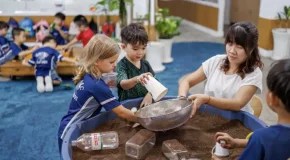
The curriculum will focus on six global themes: Who we are, Where we are in place and time, How the world works, How we organize ourselves, and Sharing the planet. These are transdisciplinary themes, meaning they will incorporate different disciplines into learning. For instance, learning will not be confined to science, geography, and ethics separately in a learning situation where students have access to water resources.
=> You might be interested in: What does IB PYP mean?
Developing skills through approaches to learning
Key to success in the future will be particular abilities that IB terms Approaches to Learning. These include thinking skills, social skills, communication skills, self-management skills, and research skills. These abilities need to be mastered in the early years to give a student a huge advantage in further education and in their future career.
Fostering attributes of the IB learner profile
In the middle of this framework is the IB learner profile. Ten attributes that the IB program hopes to instill in students. They become Inquirers, Knowledgeable, Thinkers, Communicators, Principled, Open-minded, Caring, Risk-takers, Balanced, and Reflective. These describe the character of the child, who is then a good citizen of the world.
Why inquiry-based learning matters for children
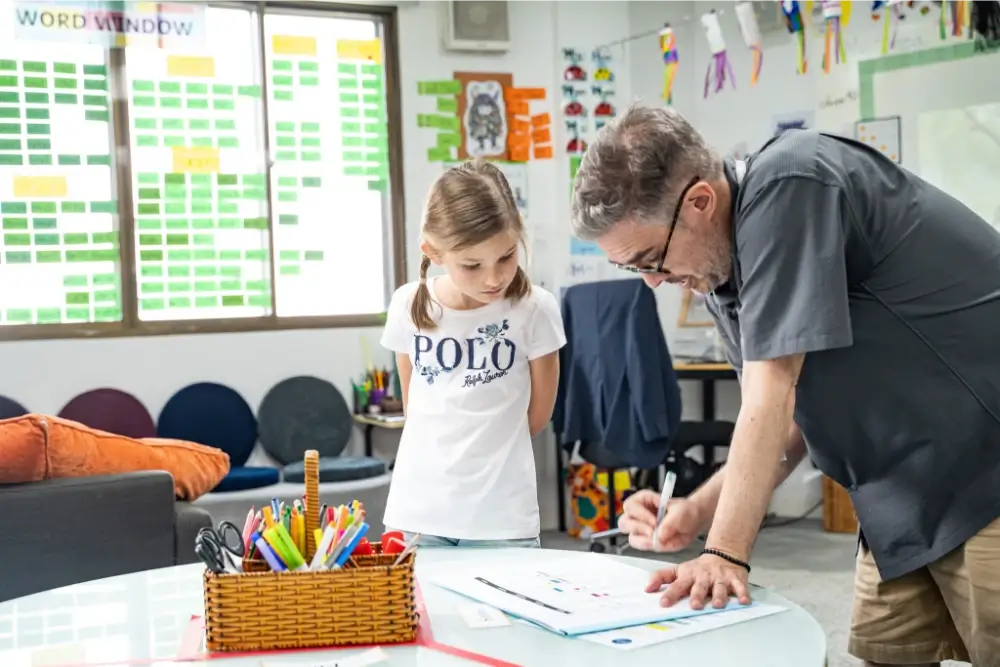
Traditional education often positions the teacher as the source of all knowledge. The students simply sit and listen. The PYP flips this model through inquiry-based learning. This method places the student at the center of the experience.
Encouraging critical thinking and problem-solving
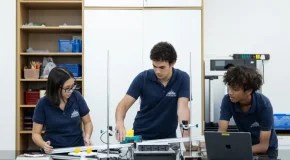
An inquiry classroom focuses on students’ natural curiosity through their investigation of problems. Students investigate questions through research and experimentation. The use of inquiry provides students with an opportunity to think critically about their work as they evaluate different types of data from various sources. By utilizing inquiry techniques, students are able to determine the best way to solve a problem and explore many avenues of possibility. The skills used to investigate problems using inquiry techniques enhance students’ abilities to solve problems in adulthood.
Building confidence through student agency
Student agency is a key concept in modern education. It means that students have voice, choice, and ownership in their learning. In a PYP classroom, a teacher might ask students how they want to present their findings. One might choose a poster, while another chooses a digital presentation. When children make decisions about their education, they become more engaged. They take responsibility for their progress. This autonomy builds immense confidence and self-motivation.
Connecting classroom lessons to the real world
One of the biggest criticisms of the traditional education system is that it is not very ‘realistic.’ Inquiry-based education seeks to change that by making the material being taught have real-world significance. So, instead of simply being taught measurement, the measurement unit might be focused on creating a garden in the community. Students become much more passionate about the material when they realize that the work they do in the classroom is significant.
Differences between IB PYP and other methods
Many parents compare the IB PYP with traditional methods or other frameworks like Montessori. While all have merits, the IB PYP offers a distinct approach to primary education.
Moving beyond memorization to conceptual understanding
The traditional system focuses heavily on memorization: dates, formulas, definitions for tests. The PYP focuses on concepts: big ideas that have staying power and can be applied in many different situations. Instead of memorizing the water cycle, students work with concepts such as “change” or “systems,” allowing them to apply this knowledge in unfamiliar ways in the future.
Holistic growth versus academic focus only

There are some educational methods that are based entirely on success and achieving well in exams and tests. The IB PYP emphasizes the whole child as a success criterion. This means that achieving well and doing well in exams are very important, as are physical, emotional, and social well-being. Creativity and physical health are also promoted as key aspects of the IB PYP program. Understanding oneself and dealing with one’s own emotions are also promoted as key success factors for the IB PYP program.
Flexible assessment instead of standardized testing
In many traditional schools, assessment usually means a standardized multiple-choice test. In the PYP, assessment looks different. It is continuous and varied. Teachers use observation, student reflections, and portfolios of work to measure progress. The focus is on the journey of learning, not just the final product. This reduces anxiety and gives a more accurate picture of what a child knows and can do.
Experience the PYP curriculum at ISHCMC
Choosing the right learning environment plays a vital role in helping your child get the most from their education. At International School Ho Chi Minh City, we are proud of our long-standing experience in delivering the IB Primary Years Programme. Our facilities are state-of-the-art and designed for inquiry, collaboration, and practice of clinical skills. Our teachers are specialists in facilitating student-led learning. They make certain each child is provided with what they need to succeed in school and socially. We welcome your visit so that you can see for yourself how our students make the most of their journey through school. Find out how we can help get your child ready for a successful future on our website.
Frequently Asked Questions (FAQs)
- Is the PYP transferable if our family moves to another country?
Yes. The IB is a global framework recognized in over 150 countries. Because the PYP focuses on transferable skills (like research and social skills) rather than just memorizing local facts, students adapt easily to new schools or national curricula anywhere in the world.
- How does the PYP support children learning English?
The inquiry approach is excellent for language learners. Because students learn through visual, hands-on, and collaborative projects, they build vocabulary in context.
- Does the PYP prepare students for standardized tests?
Yes. While the focus is on deep understanding, ISHCMC PYP students consistently outperform US national norms in Math and Reading assessments (MAP). They succeed because they understand how to solve problems, not just how to memorize answers.