

Inquiry-Based Learning vs Direct Instruction: A Parent’s Guide
Inquiry-based learning and direct instruction represent two distinct educational approaches: one centered on student questioning and the other on explicit teaching. Parents and educators often debate which method better supports long-term learning and foundational knowledge.
This article compares inquiry-based learning vs direct instruction, explores the evidence behind each, and explains how we at ISHCMC integrate both to support student growth.
What Is Inquiry-Based Learning vs Direct Instruction?
Inquiry-based learning places students at the center of the learning process. It encourages them to ask questions, explore problems, test ideas, and construct meaning through investigation.
In this model, the learning experience is active, exploratory, and shaped by the student’s curiosity. Teachers serve as facilitators who guide the process, prompting deeper thought and supporting students as they form connections across concepts.
Direct instruction, by contrast, is teacher-led and structured. It emphasizes explicit explanation, modeling, guided practice, and timely corrective feedback.
Lessons typically follow a clear sequence, enabling students to learn foundational skills efficiently before applying them in more complex tasks.

The teacher’s role differs noticeably between these approaches.
In inquiry-based learning, teachers act as coaches, asking probing questions and providing scaffolds rather than giving direct answers.
In direct instruction, teachers function as experts, delivering content systematically and ensuring comprehension through structured tasks.
The student experience also varies.
Inquiry-based learning offers autonomy, open-ended investigation, and opportunities to pursue personally meaningful questions.
Meanwhile, direct instruction provides step-by-step guidance, clear expectations, and a predictable learning path, particularly useful for beginners or when mastering essential skills.
Benefits of Each Approach
The comparison of inquiry-based learning vs direct instruction highlights that each offers distinct advantages depending on the learning context and student needs.
Benefits of Inquiry-Based Learning
Inquiry-based learning offers unique advantages that support deep understanding and long-term intellectual growth.

Before exploring each benefit, it is important for parents to recognize that inquiry requires structure, guidance, and intentional design, not free exploration.
- Deep Conceptual Understanding and Critical Thinking: This approach encourages students to examine ideas from multiple angles, form hypotheses, and test solutions. As a result, learners develop strong analytical skills and a robust conceptual foundation.
- Autonomy, Curiosity, and Engagement: By inviting students to ask questions, define problems, and take ownership of their investigations, inquiry cultivates intrinsic motivation. Students become active agents in their learning, often demonstrating higher engagement and persistence.
- Long-Term Retention and Ownership: Because students construct meaning through exploration, they tend to retain knowledge longer. The act of discovering or building understanding helps embed learning more deeply than passive listening.
- Leadership and Collaboration Skills: Inquiry tasks frequently involve team-based investigations where students design methods, share responsibilities, and negotiate solutions. This builds communication skills, leadership capacity, and the ability to collaborate across diverse groups.
Benefits of Direct Instruction
Direct instruction remains an essential teaching method, even in inquiry-rich environments, because it ensures accuracy, clarity, and strong foundations. Here are its most recognized benefits.
- Efficient Mastery of Foundational Skills: Direct instruction excels in teaching core procedures, basic facts, vocabulary, and essential strategies. Students develop automaticity more quickly, freeing cognitive space for higher-level tasks.
- Clarity, Structure, and Reduced Cognitive Load: Beginners often need explicit explanations and step-by-step models. Direct instruction provides predictable organization and clear expectations, making it easier for students to follow new content.
- Strong Classroom Management and Consistency: Many teachers report that structured lessons improve focus and reduce confusion. In large or diverse classrooms, direct instruction helps maintain momentum and ensures all students receive the same foundational support.
Summary Table
| Aspect | Inquiry-Based Learning | Direct Instruction |
|---|---|---|
| Primary Focus | Exploration, questioning, investigation | Explicit teaching, guided practice |
| Teacher Role | Facilitator, coach | Expert, lecturer, modeler |
| Student Role | Autonomous learner, investigator | Structured learner, skill-builder |
| Best For | Deep understanding, creativity, collaboration | Foundational skills, accuracy, efficiency |
| Learning Experience | Open-ended and student-led | Sequenced and teacher-led |
How ISHCMC Implements Inquiry and Direct Instruction in Our Classrooms
At ISHCMC, our pedagogical commitment in the Primary School’s PYP (Primary Years Programme) centers on “structured, purposeful inquiry.”
We believe that inquiry becomes most powerful when supported by strategic, explicit teaching. Our classrooms integrate both approaches in intentional ways to support a balanced and research-aligned learning experience.

Guided Inquiry at ISHCMC
We incorporate guided inquiry through various thoughtfully designed learning experiences that encourage exploration while ensuring appropriate scaffolding. Examples include:
- Inquiry Projects and Investigations: Students conduct research, design experiments, and engage in open-ended tasks that require them to synthesize information and draw conclusions.
- Teacher-Guided Questioning: Teachers use probing questions to extend student thinking, encourage reflection, and prompt deeper analysis.
- Ongoing Monitoring and Feedback: While students explore, teachers observe progress, assess understanding, and provide strategic support.
Purposeful Use of Direct Instruction
Direct instruction plays an equally important role at ISHCMC. We use it strategically to build essential skills before students transition into more complex inquiry tasks. This includes:
- Explicit Teaching of Core Concepts: Teachers introduce key knowledge and model processes clearly to ensure all students have a solid foundation.
- Demonstration and Modeling: Through structured examples, teachers show students how to approach tasks, solve problems, or apply strategies.
- Practice Sessions and Mini-Lessons: Targeted lessons reinforce skills and address common misconceptions before learners move into independent or collaborative inquiry.
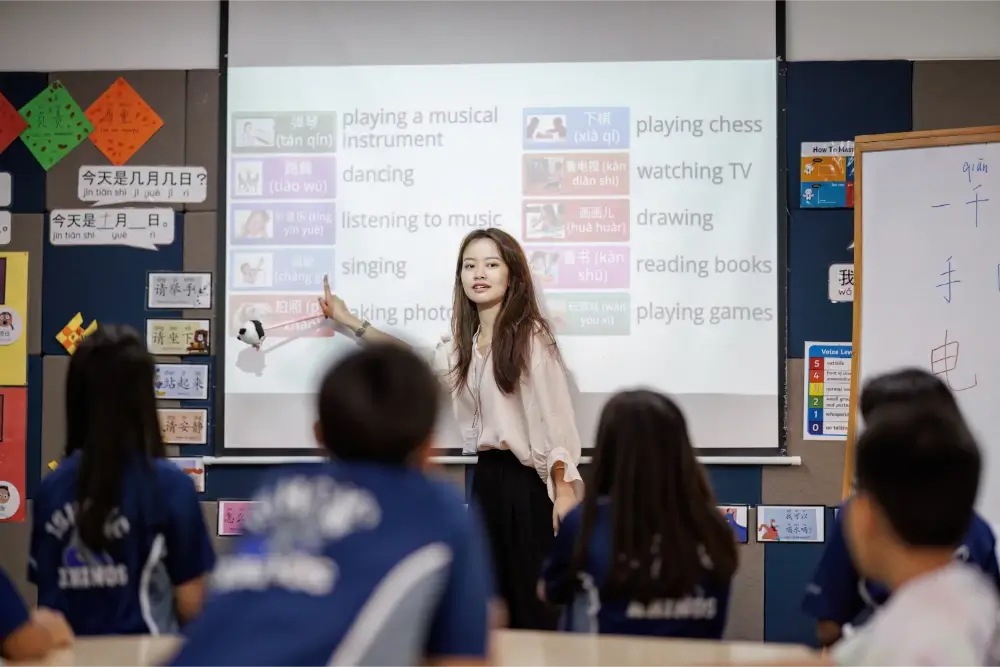
Differentiation and Scaffolding
We tailor instruction to developmental stages and student readiness:
- For Younger or Less Experienced Students: Teachers offer stronger scaffolding through structured direct instruction and gradual release models, helping students build confidence.
- For Older or More Confident Students: We provide increased autonomy, opportunities for student-led inquiry, and reflective tasks that deepen understanding.
Teacher Professional Development
Our educators are continuously trained to blend inquiry and direct instruction effectively. They learn to shift between approaches based on student progress, curriculum objectives, and assessment data. This professional learning ensures the method selected always serves student needs rather than adhering rigidly to a single philosophy.
As part of our mission to nurture autonomous, thoughtful learners prepared for a rapidly changing world, ISHCMC will continue refining the balance between inquiry and direct instruction. We believe that students thrive when they build strong foundations and have ample opportunities to question, discover, and innovate.
Empower Your Child Through ISHCMC’s Balanced Pedagogy
Choosing between inquiry-based learning vs direct instruction is unnecessary when both methods complement each other. ISHCMC’s approach integrates the strengths of inquiry-based learning and direct instruction, enabling students to develop curiosity, resilience, and firm academic foundations.
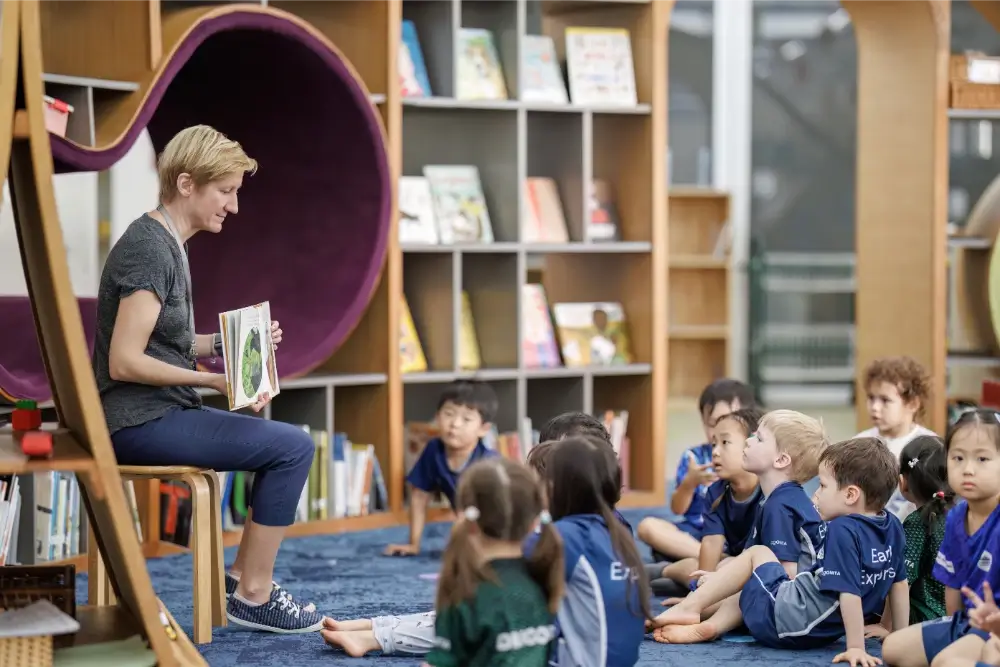
We invite you to apply to ISHCMC and join a community where students learn deeply, grow confidently, and become global citizens. Contact us to schedule a tour or speak with our admissions team to discover how our balanced pedagogy can benefit your child.
FAQs
1/ Can inquiry-based learning improve critical thinking?
Absolutely. By analyzing problems and testing hypotheses, students develop strong analytical skills and learn how to apply knowledge in new contexts.
2/ How does ISHCMC balance these two teaching methods?
ISHCMC uses “structured, purposeful inquiry,” where explicit teaching is used to build the necessary foundations for successful student-led investigations.
3/ When does ISHCMC use direct instruction?
We use it for introducing complex new concepts, modeling specific skills (like a math formula or lab safety), and during mini-lessons to correct common misconceptions.